Video Games
2 min
Spyro Reignited Trilogy: A Comprehensive Overview
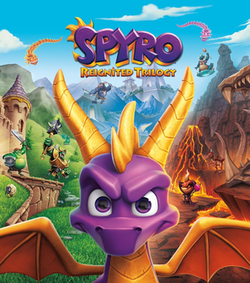
The trilogy includes remakes of Spyro the Dragon, Ripto's Rage!, and Year of the Dragon.
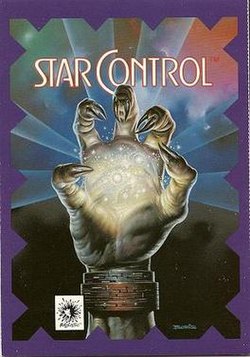
Star Control is a seminal action-strategy video game released in 1990 that defined the space combat simulator genre for a generation of home computer and console players. Developed by Toys for Bob and published by Accolade, the game is renowned for its blend of turn-based strategic maneuvering and intense, real-time arcade-style ship combat. It served as the foundation for a highly influential franchise that would later include the critically acclaimed Star Control II.
The game operates on two distinct levels: a strategic campaign and a tactical combat mode. In the campaign, players navigate a rotating star map, managing fleets and colonizing planets to secure resources such as crew and currency. The objective is to expand influence across the galaxy while dismantling the opponent's star base.
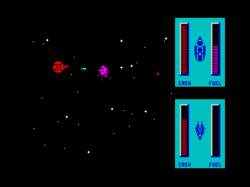
When two fleets engage, the game shifts to a one-on-one combat screen. Drawing inspiration from the 1962 classic Spacewar!, the combat emphasizes physics-based movement, utilizing nearby planets as gravity wells to gain momentum or avoid enemy fire. Each of the 14 available starships possesses unique weaponry and special abilities, requiring players to master specific matchups to succeed.
The project was spearheaded by designers Paul Reiche III and Fred Ford. Reiche, known for his work on Archon: The Light and the Dark, sought to combine the strategic depth of board-game-like conquest with the visceral excitement of space dogfighting. The game's distinct visual style and character designs were bolstered by the contributions of artists Greg Johnson and Erol Otus, while the sound design helped establish the personality of the various alien factions, such as the imposing Ur-Quan Hierarchy and the diverse Alliance of Free Stars.
Star Control was a commercial success and remains a touchstone for game design. Its influence is frequently cited in the development of modern space-faring epics, including the Mass Effect series and Stellaris. Its legacy was further cemented by the release of Star Control II in 1992, which expanded the lore and scope of the universe significantly.
No, it is a hybrid. While the galactic campaign movement and resource management are turn-based, the ship-to-ship combat sequences are real-time, arcade-style battles.
Staff (1990-11-15). Review - Star Control. Videogame & Computer World 1990-21. p. 15. Retrieved October 20, 2020.
Stuckey, Kent D. (1996). Internet and Online Law. Law Journal Press. p. 6.37. ISBN 1-58852-074-9.
Ford, Fred; Reiche III, Paul; Otus, Erol; Rianda, Jeff; Hall, Larry (1990). Star Control Manual (PC ed.). Accolade. pp. 3–4, 10–12, 17–30, 37, 38, 39–40.
"Emails from Fred Ford". IGN - Classic Gaming. May 15, 2001. Archived from the original on May 15, 2001. Retrieved October 20, 2020.
Williams, Andrew (2017-03-16). History of Digital Games: Developments in Art, Design and Interaction. CRC Press. ISBN 978-1-317-50380-4.
Cohen, Julie E. (1995). "Reverse Engineering and the Rise of Electronic Vigilantism: Intellectual Property Implications of "Lock-Out" Programs". Southern California Law Review. 68: 1091–1202. Archived from the original on 2013-11-02.
Hamilton, Kirk (September 19, 2013). "The Game That "Won" Our Classic PC Games List (If It Had A Winner)". Kotaku. Retrieved April 3, 2018.
Staff (November 1991). Reviews - Star Control. Digital Press - Issue 02. pp. 5–6. Retrieved October 20, 2020.
Raja, Vinesh; Fernandes, Kiran J. (2007). Reverse Engineering: An Industrial Perspective. Springer Series in Advanced Manufacturing. Springer Science & Business Media. pp. 199–201. ISBN 978-1-84628-856-2. ISSN 1860-5168. Archived from the original on March 4, 2018. Retrieved October 20, 2020.
IGN PC Team (December 3, 2008), The Wednesday 10: Franchises We Want Resurrected, IGN, retrieved October 20, 2020
The trilogy includes remakes of Spyro the Dragon, Ripto's Rage!, and Year of the Dragon.
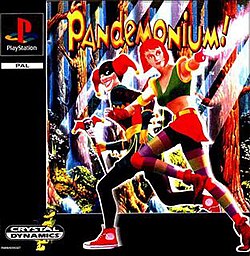
Pandemonium! was developed by Toys for Bob and released in 1996.

Developed by Toys for Bob and published by Eidos Interactive in 1998.