Video Games
2 min
Spyro Reignited Trilogy: A Comprehensive Overview
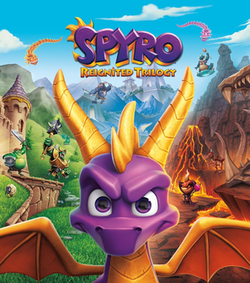
The trilogy includes remakes of Spyro the Dragon, Ripto's Rage!, and Year of the Dragon.
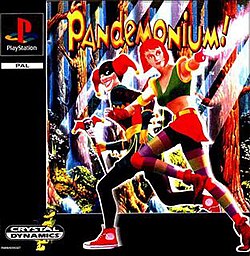
Pandemonium! is a platform video game released in 1996, developed by Toys for Bob and published by Crystal Dynamics. The game is notable for its use of 2.5D graphics, where 3D polygonal models are rendered within a two-dimensional gameplay plane, creating a unique visual experience that was cutting-edge for the mid-1990s.
The game follows the journey of two protagonists: Fargus, a jester accompanied by his stick-puppet Sid, and Nikki, an acrobat. Players can select either character at the start of each level, with each offering distinct abilities. Fargus utilizes a spinning attack to defeat enemies, while Nikki possesses the ability to perform a double jump, allowing for different traversal strategies across the game's varied environments.
The gameplay takes place on a 2D surface that twists and bends through a 3D environment, occasionally overlapping itself. This design allowed for branching paths and complex level geometry. Combat typically involves jumping on enemies, though players can also utilize power-ups such as freeze rays and shrink rays to manipulate the size and state of their adversaries.
Development began in December 1994, with the team initially focusing on understanding 3D dynamics. By the time the game moved into full production, the team had grown to approximately 30 people. Lead designer Paul Reiche III oversaw the project, which aimed for a high level of polish. To maintain a consistent frame rate of 30 frames per second, the final months of development were dedicated to rigorous bug-fixing and level-of-detail adjustments. The game was eventually released across multiple platforms, including the PlayStation, Sega Saturn, and Windows, with later ports appearing on the N-Gage and iOS.
In the context of Pandemonium!, 2.5D refers to a game that uses 3D graphics and environments but restricts the player's movement to a two-dimensional plane, similar to traditional side-scrolling platformers.
"Pandemonium". Next Generation. No. 25. Imagine Media. January 1997. p. 174.
"Pandemonium". Official Playstation Magazine. No. 14. January 1997. pp. 72–74. Retrieved June 1, 2021.
Hey, Steve (July 1997). "Pandemonium!". Computer and Video Games. No. 188. pp. 66–67. Retrieved June 1, 2021.
Ginsberg, Steve (October 1996). "Crystal Dynamics' game plan: Hone for the holidays". San Francisco Business Journal. Archived from the original on January 7, 2002. Retrieved February 10, 2026.
"Disks + Discs New In Store". Staffordshire Newsletter (Uttoxeter ed.). December 6, 1996. p. 48. Retrieved December 14, 2023. Red Alert (CD ROM)//War Hammer (Play)//Command/Conquer (Play)//Broken Sword (Play)//Pandemonium (Play)//
"EA Mobile Unleashes Six New Games on Apple App Store". Electronic Arts Inc. Archived from the original on 2011-07-10. Retrieved 2009-11-21.
Mortlock, Dean (June 1997). "Review: Pandemonium". Saturn Power. No. 1. Future plc. pp. 60–63.
Spender (November 30, 2011). "Pandemonium And Its Sequel Hopping Onto PsOne Classics". Siliconera.
"Pandemonium Apologies". Sega Saturn Magazine. No. 21. Emap International Limited. July 1997. p. 8.
"Review Crew: Pandemonium" (PDF). Electronic Gaming Monthly. No. 89. Ziff Davis. December 1996. p. 96.
The trilogy includes remakes of Spyro the Dragon, Ripto's Rage!, and Year of the Dragon.

Developed by Toys for Bob and published by Eidos Interactive in 1998.
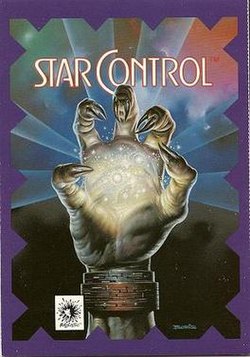
Star Control was originally released in 1990 for MS-DOS and the Amiga before being ported to platforms like the Sega Genesis.