Film History
3 min
History and Evolution of Hong Kong Martial Arts Cinema
Kung fu films are a subgenre of martial arts cinema originating in Hong Kong.
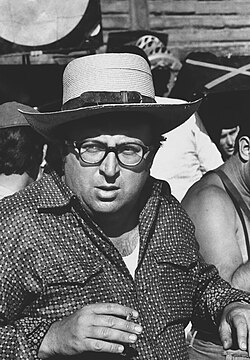
Sergio Leone (1929–1989) was an influential Italian filmmaker whose stylistic innovations fundamentally transformed the Western genre. Often credited as the pioneer of the "Spaghetti Western," Leone moved away from the moral clarity of traditional American Westerns, favoring morally ambiguous characters, intense close-ups, and a deliberate, operatic pacing that redefined cinematic tension.
Born in Rome to a family deeply embedded in the film industry—his father was the silent film pioneer Vincenzo Leone and his mother was actress Bice Waleran—Leone was exposed to the craft from a young age. He began his professional career in 1948, working as an assistant to Vittorio De Sica on the neorealist masterpiece Bicycle Thieves. Throughout the 1950s, he gained extensive experience working on large-scale international productions at Cinecittà Studios, including Quo Vadis and Ben-Hur. These experiences provided him with the technical expertise to manage complex, low-budget productions, which he later utilized for his solo directorial debut, The Colossus of Rhodes (1961).
In the 1960s, Leone pivoted toward the Western genre, infusing it with a distinct Mediterranean sensibility. His 1964 film A Fistful of Dollars, inspired by Akira Kurosawa's Yojimbo, launched the "Dollars Trilogy" and established Clint Eastwood as an international star. Unlike the polished heroes of classic Hollywood Westerns, Leone’s protagonists were often gritty, morally complex, and driven by self-interest.
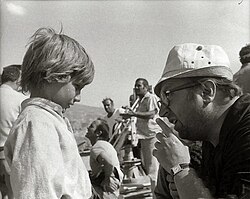
Leone’s visual language was characterized by the juxtaposition of extreme close-ups—capturing the sweat, eyes, and minute expressions of his actors—with sweeping, panoramic long shots. This technique, paired with the iconic, experimental scores composed by his childhood classmate Ennio Morricone, created a unique atmosphere that emphasized the mythic quality of the American frontier.
Following the success of the Dollars Trilogy, Leone directed the "Once Upon a Time" series, which included Once Upon a Time in the West (1968), Duck, You Sucker! (1971), and his final magnum opus, Once Upon a Time in America (1984). His work remains a cornerstone of postmodern cinema, influencing generations of directors who continue to draw inspiration from his innovative editing, sound design, and subversion of genre tropes.
A Spaghetti Western is a subgenre of the Western film that emerged in the 1960s, primarily produced by Italian studios. These films are characterized by a more cynical, violent, and morally ambiguous tone compared to traditional American Westerns.
"Sergio Leone company website".
"Greatest Film Directors". Filmsite.org. Archived from the original on 5 September 2019. Retrieved 7 June 2019.
Macnab, Geoffrey (15 May 2012). "Martin Scorsese Breathes New Life Into Gangster Classic Once Upon a Time in America". The Independent. Retrieved 20 May 2023.
Bozzola, Lucia (2014). "Sergio Leone". Movies & TV Dept. The New York Times. Archived from the original on 16 July 2014. Retrieved 16 May 2023.
"Al cinema "Sergio Leone-l'italiano che inventò l'America". Ecco il frame con Morricone: "Compagni alle elementari"". Video: ultime notizie - Corriere TV (in Italian). 20 October 2022. Retrieved 29 May 2023.
"The film with three names – in praise of Sergio Leone's neglected spaghetti western". British Film Institute. 24 April 2018. Archived from the original on 2 June 2019. Retrieved 2 June 2019.
"99 and 44/100% Dead". catalog.afi.com. Retrieved 21 February 2022.
"Quentin Tarantino Pens Heartfelt Essay on Sergio Leone, the 'Greatest of All Italy's Filmmakers'". IndieWire. 3 June 2019. Archived from the original on 7 June 2019. Retrieved 7 June 2019.
"Sergio Leone". Rotten Tomatoes. Fandango. Archived from the original on 23 May 2019. Retrieved 3 June 2019.
Cox, Alex (2009). 10,000 Ways to Die: A Director's Take on the Spaghetti Western. Oldcastle Books. p. 388. ISBN 978-1842433041.
Kung fu films are a subgenre of martial arts cinema originating in Hong Kong.
The term "underground film" first appeared in print in a 1957 essay by film critic Manny Farber.
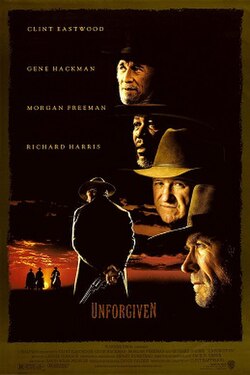
Unforgiven won four Academy Awards, including Best Picture and Best Director.