
Music Theory
3 min
Irregular Musical Rhythms and Subdivisions
A tuplet divides a musical beat into an irregular number of subdivisions not normally dictated by the time signature.
In music, tremolo (Italian for "trembling") is a trembling effect applied to vocal or instrumental sound. Depending on the context, tremolo can refer to the rapid repetition of a single note, an oscillation between two different notes, or a periodic variation in volume (amplitude).

Tremolos may be categorized as either measured, where the exact rate of repetition or oscillation is specified by rhythmic notation, or unmeasured, where the rate is not strictly specified and is understood to be performed as rapidly as possible.
The rapid reiteration of a single note is a characteristic effect on bowed string instruments, achieved by moving the bow back and forth rapidly. However, the technique can be executed on any instrument where it is practicable.
Notation for this effect consists of one or more strokes drawn through the stem of a note, corresponding to the beams that would connect individual repeated notes. On plucked string instruments like the harp, this technique is termed bisbigliando (whispering). On instruments such as the guitar and mandolin, tremolo picking involves the rapid articulation of notes with a plectrum or fingers to sustain notes that would otherwise rapidly decay.

Wind instruments achieve an analogous unmeasured effect via flutter-tonguing, while percussion instruments utilize a roll.
A rapid alternation between two different pitches constitutes another category of tremolo. On bowed string instruments, this is called a fingered tremolo. It is notated by writing the pitches as a melodic interval, with both notes receiving the rhythmic value of the total duration, connected by beams or strokes indicating speed.

A distinct category of tremolo involves a variation in signal amplitude. This can be produced acoustically or via electronic effects in guitar amplifiers and standalone pedals, which rapidly adjust signal volume to create a shuddering effect.

Tremolo is frequently confused with vibrato. In strict acoustic and technical terms, tremolo represents a variation of volume or amplitude, whereas vibrato represents a variation of pitch or frequency.
Tremolo is a variation in volume or amplitude, whereas vibrato is a variation in pitch or frequency.
"Examples of Tremolo on Acoustic Guitar". Kapil Srivastava. August 9, 2020. Archived from the original on December 11, 2021. Retrieved August 12, 2020 – via YouTube.
"Mandolin Glossary: Tremolo". Mandolin Cafe. Retrieved March 28, 2022.
Hunter, Dave (November 16, 2013). The Fender Stratocaster: The Life and Times of the World's Greatest Guitar and Its Players. Quarto Publishing Group USA. p. 221. ISBN 978-1-61058-878-2.
Teagle, John; Sprung, John (1995). Fender Amps: The First Fifty Years. Hal Leonard Corporation. p. 225. ISBN 978-0-7935-3733-4.
Hunter, Dave (February 1, 2011). The Rough Guide to Guitar. Rough Guides UK. p. 311. ISBN 978-1-4053-8873-3.
Fallows, David (2010). "Tremolo (i)". The New Grove Dictionary of Music and Musicians (2nd ed.). ISBN 9781561592395.
Weiss, Piero; Taruskin, Richard (1984). Music in the Western World: A History in Documents. Schirmer Books. p. 146. ISBN 0-02-872900-5.
Forsyth, Cecil (1982) [1935]. Orchestration. new foreword by William Bolcom. New York: Dover Publications. ISBN 0-486-24383-4. OCLC 757100643.
Whittaker, Paul. "An Interpretation and Re-examination of the Music and Text" (PDF). Music of the Robert ap Huw Manuscript. British Museum, Additional MS 14905. Retrieved March 25, 2017 – via bangor.ac.uk.
A tuplet divides a musical beat into an irregular number of subdivisions not normally dictated by the time signature.
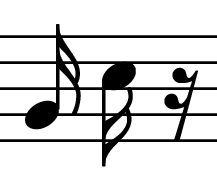
A sixteenth note, or semiquaver, lasts for half the duration of an eighth note.
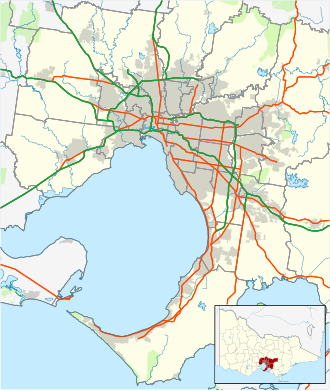
Mulgrave is located 21 kilometres south-east of Melbourne's central business district.