M
Music Theory and Performance
2 min
Musical Tremolo Effect and Techniques
Tremolo involves either the rapid repetition of a note, alternation between notes, or variation in volume.

In music theory, a tuplet (sometimes referred to historically as an artificial division, irregular rhythm, or extra-metric grouping) is any rhythmic grouping that divides a beat into a different number of equal subdivisions than what is normally permitted by the prevailing time signature. Familiar examples include triplets and duplets. These groupings are typically indicated in musical notation by a numeral, a bracket, or occasionally a ratio representing the proportional relationship between the subdivision and the standard note values.
The modern term tuplet emerged as a back-formation from compound words such as quintuplet and sextuplet, drawing parallels from mathematical terms such as tuple and the suffixes -uplet and -plet. Historically and across various stylistic traditions, alternative labels have included irrational rhythm, artificial division, abnormal division, and irregular rhythmic grouping. While the term irrational rhythm remains in use among certain musicians, it is technically a misnomer in a mathematical context because the underlying note values constitute rational mathematical fractions.
Tuplets must also be distinguished from polyrhythms. Whereas a tuplet modifies the subdivision of a single metric beat or measure, a polyrhythm involves the simultaneous execution of two or more independent, conflicting meters or rhythmic streams.
The most frequent and widely recognized tuplet is the triplet. In a standard simple meter where two quarter notes equal the duration of a half note, a group of three triplet quarter notes fits into that exact same span. Consequently, the duration of an individual triplet quarter note is equal to two-thirds of a standard quarter note. Similarly, three triplet eighth notes occupy the exact duration of a single standard quarter note.
As the subdivision counts increase, terminology follows standard numerical prefixes, yielding duplets, quadruplets, quintuplets, sextuplets, septuplets, and octuplets. Higher-order groupings such as nonuplets and decuplets established themselves firmly in composition and notation manuals by the mid-20th century, whereas even larger subdivisions are frequently labeled descriptively with phrases such as group of eleven notes.
Standard musical notation represents tuplets using a numeral placed above or below a beam, frequently accompanied by a square bracket enclosing the affected notes. In cleaner scores where subdivisions are repeated consistently across measures, composers often omit the numerical indicator entirely if the rhythmic intent remains clear from the surrounding context and time signature.
When ambiguity arises—such as with septuplets that may imply seven notes played in the time of four or seven notes played in the time of eight—composers may employ explicit ratios (such as 7:4) to eliminate confusion. In French musical scores, proportional words like pour (for) or de (of) occasionally replace the colon in ratio markings.
A tuplet is a rhythm that involves dividing a beat into a different number of equal subdivisions than what is normally permitted by the time signature, such as playing three notes in the space of two.
Donato 1963, 34.
Read 1964, 181.
Sembos 2006, 86.
Baker 1895, 177.
Anon. 1997–2000.
Riemann 1884, 134.
Marx 1853, 114.
Schonbrun 2007, 8.
Read 1964, 189.
Köhler 1858, 2:52–53.
Tremolo involves either the rapid repetition of a note, alternation between notes, or variation in volume.
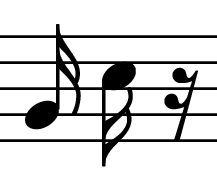
A sixteenth note, or semiquaver, lasts for half the duration of an eighth note.
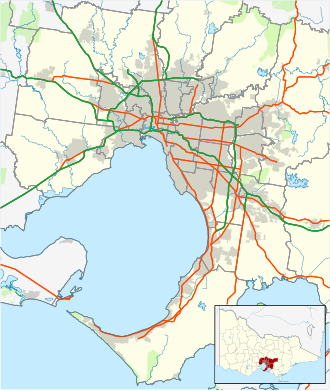
Mulgrave is located 21 kilometres south-east of Melbourne's central business district.