Ornithology
2 min
The Biology and Evolution of Songbirds
Songbirds belong to the suborder Passeri, which contains approximately 4,000 species.
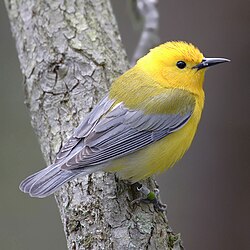
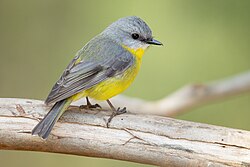
The family Parulidae, commonly referred to as New World warblers or wood-warblers, comprises a diverse group of small, often brightly colored passerine birds restricted to the Americas. With approximately 120 recognized species, these birds are distinct from the Old World warblers (Sylviidae) and the Australian warblers (Acanthizidae), sharing no close evolutionary relationship with them despite the shared common name.
Most members of the Parulidae family are arboreal insectivores, though notable exceptions exist. Species such as the ovenbird (Seiurus aurocapilla) and the two waterthrush species (Parkesia genus) have adapted to a primarily terrestrial lifestyle. The family is believed to have originated in northern Central America, a region that currently hosts the highest levels of species diversity. During interglacial periods, many species expanded their range northward, establishing migratory patterns that see them return to their ancestral tropical regions during the winter months.
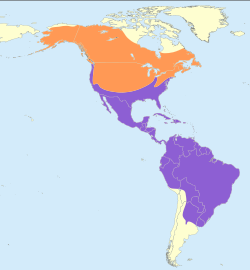
The scientific naming of the family has evolved significantly since the 18th century. In 1758, Carl Linnaeus classified the northern parula as a tit, naming it Parus americanus. As avian taxonomy became more refined, the genus was reclassified as Parulus and eventually Parula, which serves as the type genus for the family Parulidae. The family was formally recognized in the mid-20th century, with significant contributions to its classification by researchers such as Alexander Wetmore.
The family exhibits a complex evolutionary history. Early colonization of South America by the genera Myioborus and Basileuterus likely occurred before the formation of the Isthmus of Panama, suggesting that these groups diverged early in the family's history. Today, the family is represented by a wide array of genera, including Setophaga, which contains the largest number of species, and specialized groups like the yellowthroats (Geothlypis) and the whitestarts (Myioborus).
No. Despite sharing the common name 'warbler,' the New World warblers (Parulidae) and Old World warblers (Sylviidae) belong to different evolutionary lineages.
Gill, Frank; Donsker, David; Rasmussen, Pamela, eds. (July 2023). "New World warblers, mitrospingid tanagers". IOC World Bird List Version 13.2. International Ornithologists' Union. Retrieved 22 November 2023.
Lovette, I.J.; Pérez-Emán, J.L.; Sullivan, J.P.; Banks, R.C.; Fiorentino, I.; Córdoba-Córdoba, S.; Echeverry-Galvis, M.; Barker, F.K.; Burns, K.J.; Klicka, J.; Lanyon, S.M.; Bermingham, E. (2010). "A comprehensive multilocus phylogeny for the wood-warblers and a revised classification of the Parulidae (Aves)". Molecular Phylogenetics and Evolution. 57 (2): 753–770. Bibcode:2010MolPE..57..753L. doi:10.1016/j.ympev.2010.07.018. PMID 20696258.
Wetmore, A.; Friedmann, H.; Lincoln, F.C.; Miller, A.H.; Peters, J.L.; van Rossem, A.J.; Van Tyne, J.; Zimmer, J.T. (1947). "Twenty-second supplement to the American Ornithologists' Union checklist of North American birds" (PDF). Auk. 64 (3): 445–452 [451]. doi:10.2307/4080390. JSTOR 4080390.
Barker, F.K.; Burns, K.J.; Klicka, J.; Lanyon, S.M.; Lovette, I.J. (2015). "New insights into New World biogeography: An integrated view from the phylogeny of blackbirds, cardinals, sparrows, tanagers, warblers, and allies". Auk. 132 (2): 333–348. doi:10.1642/AUK-14-110.1. S2CID 53058340.
Oliveros, C.H.; et al. (2019). "Earth history and the passerine superradiation". Proceedings of the National Academy of Sciences of the United States. 116 (16): 7916–7925. Bibcode:2019PNAS..116.7916O. doi:10.1073/pnas.1813206116. PMC 6475423. PMID 30936315.
Harrison, Hal H. (1984). Wood Warblers' World. New York City: Simon & Schuster. p. 17.
Songbirds belong to the suborder Passeri, which contains approximately 4,000 species.
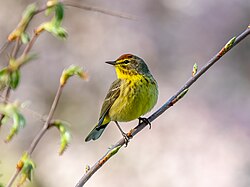
The palm warbler is one of the few warbler species that constantly bobs its tail.
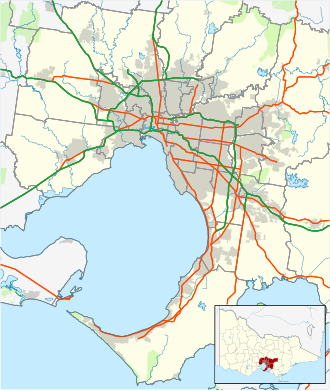
Mulgrave is located 21 kilometres south-east of Melbourne's central business district.