Geography
2 min
Mulgrave Suburb History and Geography
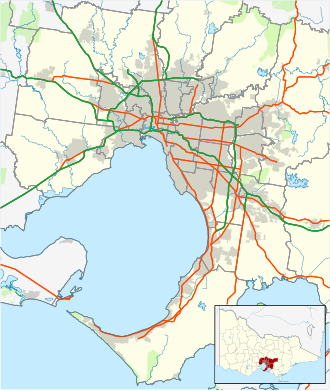
Mulgrave is located 21 kilometres south-east of Melbourne's central business district.
The Great Vermont Flood of 1927 was a severe natural disaster that struck Vermont and surrounding parts of New England in early November 1927. Heavy rainfall triggered widespread and destructive flooding, with Vermont sustaining the vast majority of the damage and casualties. The disaster resulted in dozens of fatalities and extensive damage to infrastructure.

During October 1927, statewide rainfall averaged roughly 150 percent of normal levels, while northern and central weather stations recorded up to 200 to 300 percent of normal precipitation. Although these earlier periods of rain were separated enough to prevent immediate flooding, they left the soil completely saturated. Because the rain occurred late in the year when vegetation was near seasonal dormancy, subsequent rainfall ran off directly into local river systems.
Torrential rains began on the evening of November 2, 1927, as a cold front moved eastward into the region. Intensity escalated significantly on November 3 as a low-pressure center traveled up the Northeast coast, drawing moisture associated with a tropical system over the western Atlantic. As moisture-laden air encountered the Green Mountains, it was forced upward, producing torrential downpours along and east of the mountain range. For instance, the Weather Bureau station in Northfield recorded 8.71 inches (221 mm) of total rainfall from the late evening of November 2 to the late morning of November 4.

The flood destroyed 1,285 bridges and caused at least 84 fatalities, including Vermont's Lieutenant Governor Samuel Hollister Jackson, who drowned while attempting to escape his flooded vehicle.

The destruction marked a turning point in the relationship between state and municipal governments. Because local towns lacked the resources to repair or rebuild the thousands of destroyed bridges, the state government assumed a larger responsibility for the statewide road and bridge network.
In 1928, U.S. President Calvin Coolidge toured his home state to observe recovery efforts, delivering a notable speech in Bennington praising the resilience of Vermont residents. The disaster also left a mark on regional literature, notably appearing at the beginning of H.P. Lovecraft's 1931 novella The Whisperer in Darkness.
The flood occurred in early November 1927, following a particularly wet October.
"Historic Flood November 1927". National Weather Service Forecast Northeast River Forecast Center. Retrieved April 2, 2023.
"Flashback Photo: The Great Vermont Flood of 1927 - New England Historical Society". www.newenglandhistoricalsociety.com. Retrieved 2016-12-30.
Hilke, Jens. "About The 1927 Flood". Landscapes Change Program. University of Vermont. Retrieved 2016-12-30.
"Flood of 1927". Vermont History Explorer. Vermont Historical Society. Retrieved December 30, 2016.
National Oceanic and Atmospheric Administration, The Great Vermont Flood of 1927, November 3-4", citing Luther B. Johnson, 1928 (republished 1996 by Greenhills Books) and David Ludlum, The Vermont Weather Book. This article incorporates text from this source, which is in the public domain.
National Oceanic and Atmospheric Administration, flood of November 3–4, 1927", citing Luther B. Johnson, 1928 (republished 1996 by Greenhills Books) and David Ludlum, The Vermont Weather Book.
Frank M. Bryan and Bill Mares, Real Vermonters Don't Milk Goats, New England Press, 1983, p. 63.
Kristin Grimes, A Terrifying, Deadly Storm Struck Vermont In 1927 And No One Saw It Coming", Vermont Nature, Nov. 4, 2016; accessed July 19, 2021
Mulgrave is located 21 kilometres south-east of Melbourne's central business district.
The violin octet consists of eight acoustically scaled bowed string instruments.
Goran Obradović was born on January 29, 1971.