Geography
2 min
Mulgrave Suburb History and Geography
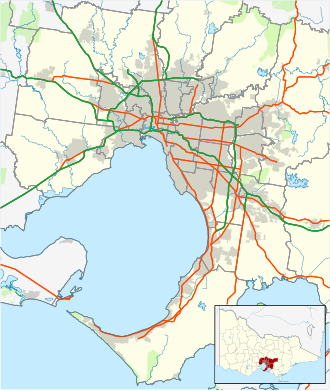
Mulgrave is located 21 kilometres south-east of Melbourne's central business district.
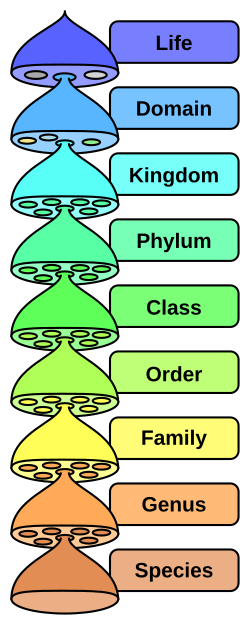
In biological classification, a subspecies is a taxonomic rank positioned immediately below that of a species. It is used to categorize populations of a single species that inhabit distinct geographic ranges and exhibit consistent morphological differences—such as variations in size, coloration, or physical structure—while remaining capable of interbreeding. The recognition of a subspecies is a formal taxonomic decision, often reflecting local adaptation or geographic isolation.
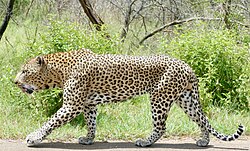
The naming conventions for subspecies vary significantly across scientific disciplines, governed by specific international codes. In zoology, the International Code of Zoological Nomenclature (ICZN) mandates that the subspecies is the only recognized rank below the species level. A subspecies name is expressed as a trinomen, consisting of the species binomen followed by a third term. For instance, Panthera pardus fusca identifies the Indian leopard, a subspecies of the leopard (Panthera pardus).
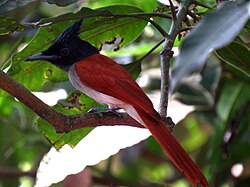
Botanical and mycological nomenclature, governed by the International Code of Nomenclature for algae, fungi, and plants, allows for a broader range of infraspecific ranks, including varieties and forms. In these fields, the rank must be explicitly stated, typically using the abbreviation subsp. (e.g., Schoenoplectus californicus subsp. tatora).
When a species is divided into subspecies, the population that includes the original type specimen is designated as the nominotypical subspecies or nominate subspecies. In zoology, this subspecies repeats the species name (e.g., Motacilla alba alba). In botany, this is referred to as an autonym, where the subspecific epithet mirrors the species name.
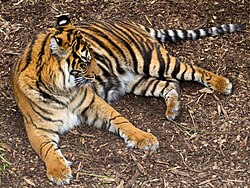
Species are often categorized based on their internal diversity. A polytypic species is one that contains two or more distinct subspecies or populations that show genetic and phenotypic divergence. Conversely, a monotypic species consists of populations that are relatively uniform across their entire range, with no recognized subspecies.
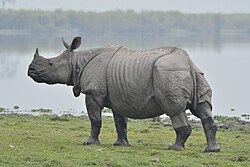
Yes, subspecies are by definition capable of interbreeding and producing fertile offspring, as they remain part of the same species.
"Scientific Nomenclature". Centers for Disease Control and Prevention. Retrieved 20 January 2021.
Rosenberg, Gary; et al. (eds.). "ICZN Glossary". International Code of Zoological Nomenclature. International Commission on Zoological Nomenclature.
"International Code of Nomenclature of Bacteria: Bacteriological Code, 1990 Revision. - Chapter 3: Rules of Nomenclature with Recommendations". National Center for Biotechnology Information. Retrieved 17 January 2013.
International Code of Zoological Nomenclature, Art. 47
Kitchener, A. C.; Breitenmoser-Würsten, C.; Eizirik, E.; Gentry, A.; Werdelin, L.; Wilting, A.; Yamaguchi, N.; Abramov, A. V.; Christiansen, P.; Driscoll, C.; Duckworth, J. W.; Johnson, W.; Luo, S.-J.; Meijaard, E.; O’Donoghue, P.; Sanderson, J.; Seymour, K.; Bruford, M.; Groves, C.; Hoffmann, M.; Nowell, K.; Timmons, Z.; Tobe, S. (2017). "A revised taxonomy of the Felidae: The final report of the Cat Classification Task Force of the IUCN Cat Specialist Group". Cat News. Special Issue 11: 66–69. hdl:10088/32616.
Mayr, E. (1970). Populations, Species, and Evolution: An Abridgment of Animal Species and Evolution. Harvard University Press. ISBN 9780674690103.
Monroe, B. L. (1982). "A modern concept of the subspecies". The Auk. 99 (3): 608–609.
Russell, Peter J.; Hertz, Paul E.; McMillan, Beverly (2011). "21: Speciation". Biology: The Dynamic Science. Brooks/Cole California. p. 456. ISBN 978-1133418849.
Linné, C. (1735). Systema naturae, sive, Regna tria naturae systematice proposita per classes, ordines, genera, & species. Lugduni Batavorum: Theodor Haak.
"Species – Speciation". Encyclopedia Britannica. Retrieved 20 April 2021.
Mulgrave is located 21 kilometres south-east of Melbourne's central business district.
The violin octet consists of eight acoustically scaled bowed string instruments.
Goran Obradović was born on January 29, 1971.