
Corporate Finance
2 min
Corporate Mergers and Acquisitions: Principles and Strategic Frameworks
A merger involves the combination of two entities into one, whereas an acquisition involves one entity purchasing the assets or equity of another.
A corporate spin-off is a strategic corporate action in which a parent company separates a division or subsidiary into an independent, standalone business. Unlike a divestment or sell-off, where assets are sold to a third party for cash or securities, a spin-off involves distributing shares of the new entity to the existing shareholders of the parent company.[1][7] This allows the parent company to shed a business unit while maintaining the value of that unit for its original investors.
Companies typically pursue spin-offs when they believe that the market value of the separated entities will exceed their combined value as a single, diversified organization. This is often driven by the desire to eliminate the conglomerate discount, a phenomenon where stock markets value a diversified group at less than the sum of its individual parts.[3] By separating, each entity can focus on its core competencies, implement specialized management strategies, and pursue growth trajectories tailored to its specific industry.[5]
Spin-offs also provide a mechanism for high-growth divisions to command higher valuation multiples once they are no longer tethered to lower-growth or legacy business units. This separation can also shield the new entity from the parent company's existing corporate image or history, allowing it to operate with greater agility.[3]
While the new company operates as an independent entity with its own assets, intellectual property, and management team, the parent company often provides initial support to ensure a smooth transition. This support may include:
The success of these arrangements often depends on the collaboration between the leadership teams of both the parent and the new entity.[6]
The U.S. Securities and Exchange Commission (SEC) maintains a precise definition for spin-offs, emphasizing that the equity owners of the parent company must receive equity stakes in the newly formed company.[7] In common business parlance, the term is sometimes used more broadly to describe "spin-outs"—startups formed when employees leave an existing organization (such as a university or firm) to establish an independent venture based on technology or intellectual property developed at the prior institution.[8][15]
Other related terms include hive-ups, hive-downs, or hive-acrosses, which refer to specific methods of transferring business assets between parent companies, subsidiaries, or fellow subsidiaries within a corporate group.[9][10][11]
The prevalence of spin-offs often fluctuates with market conditions. For instance, the 2011 "starburst revival" saw many companies choosing to spin off divisions rather than sell them, often due to a lack of favorable offers from private equity or other firms.[3] Notable examples include the 1999 separation of Agilent Technologies from Hewlett-Packard and the 2011 separation of the wine business from Foster's Group to form Treasury Wine Estates.[7][13]
In a spin-off, the parent company distributes shares of the new entity to its existing shareholders. In a divestment or sell-off, the parent company sells the business unit to a third party in exchange for cash or other assets.
Nicholson, Chris V. (February 15, 2011). "Foster's to Separate Wine and Beer Businesses in May". DealBook. The New York Times. Retrieved November 14, 2017.
"Starbursting". The Economist. March 24, 2011. Archived from the original on Aug 7, 2020. Retrieved April 18, 2011.
Richards, Graham (2008). Spin-Outs: Creating Businesses from University Intellectual Property. Petersfield, Hampshire: Harriman House. ISBN 978-1-905641-98-7. Retrieved November 14, 2017.
"Definition of hive off". The Free Dictionary. Archived from the original on 9 April 2021. Retrieved 10 April 2021.
"Spin-out Companies". Oxford University Innovation. University of Oxford. Archived from the original on Jul 7, 2014. Retrieved June 9, 2014.
Roger Yu (April 21, 2015). "Gannett to change name to TEGNA amid print unit spinoff". USA Today. Retrieved May 14, 2026.
New Zealand Master Tax Guide (2013 edition) – p. 771 1775470024 CCH New Zealand Ltd – 2013 "Essentially, a 'spinout' involves the transfer by a parent company of shares in a wholly owned subsidiary to the shareholders in the parent. To the extent that there is a common interest in the old and new holding companies, the spinout ..."
"About Isis". Oxford University Innovation. University of Oxford. Archived from the original on November 15, 2013. Retrieved November 14, 2017.
"Hive up under FRS 102". ICAEW. 1 Dec 2015. Archived from the original on Nov 29, 2022.
Adomako, Samuel; Zahoor, Nadia; Tang, Shi; Chu, Irene; Zhang, Stephen X. (2025-05-01). "CEO vision articulation, TMT relational attachment, and corporate entrepreneurship". The Leadership Quarterly. 36 (3) 101881. doi:10.1016/j.leaqua.2025.101881. hdl:2031/95e9b753-cc28-4a9f-b373-efbae4ccd00e. ISSN 1048-9843.
A merger involves the combination of two entities into one, whereas an acquisition involves one entity purchasing the assets or equity of another.
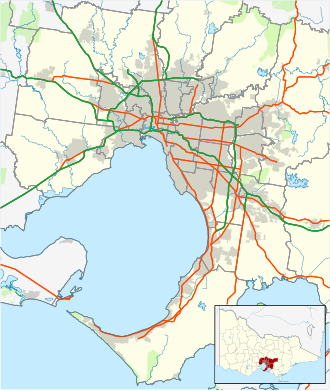
Mulgrave is located 21 kilometres south-east of Melbourne's central business district.
The violin octet consists of eight acoustically scaled bowed string instruments.