Business and Finance
2 min
2026 Leveraged Buyout of Electronic Arts
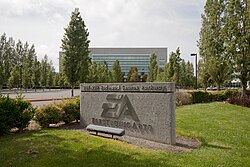
The acquisition of Electronic Arts was completed on August 4, 2026, for US$55 billion.

Mergers and acquisitions (M&A) represent critical corporate finance activities where the ownership of business entities or their operating units is transferred or consolidated. These transactions are fundamental tools for corporate strategy, allowing organizations to achieve growth, diversification, or structural realignment within their competitive landscape.
While often used interchangeably, mergers and acquisitions have distinct legal and economic definitions. A merger typically involves the consolidation of two separate entities into a single, unified legal organization. Conversely, an acquisition occurs when one entity purchases the majority or total ownership stake of another, effectively taking control of its assets or equity interests.
Companies engage in M&A for various strategic reasons, including:
M&A transactions are subject to rigorous oversight to ensure market competition remains healthy. In the United States, the Clayton Act serves as a primary legal instrument, prohibiting transactions that would substantially lessen competition or create a monopoly. Furthermore, the Hart–Scott–Rodino Act mandates that companies provide advance notice to the Federal Trade Commission (FTC) and the Department of Justice for transactions exceeding specific size thresholds.
Despite the potential for value creation, M&A success is notoriously difficult to achieve. Research indicates that a significant percentage of acquisitions fail to meet their stated objectives. Common hurdles include poor due diligence, cultural incompatibility between organizations, and the inability to effectively integrate operations post-transaction.
The landscape of M&A has evolved to include specialized structures such as "acqui-hires," where a company acquires a startup primarily to secure its workforce rather than its product. Additionally, serial acquirers—firms that engage in frequent, disciplined M&A—often demonstrate higher success rates compared to organizations that pursue transactions only sporadically.
A friendly takeover occurs when the target company's board of directors approves the acquisition. A hostile takeover occurs when the acquiring company attempts to purchase the target against the wishes of its management or board.
Rey, Patrick; Tirole, Jean (1 January 2007). "Chapter 33 A Primer on Foreclosure". Handbook of Industrial Organization. Vol. 3. pp. 2145–2220. doi:10.1016/S1573-448X(06)03033-0. ISBN 978-0-444-82435-6.
Malmendier, U; Tate, G (July 2008). "Who makes acquisitions? CEO overconfidence and the market's reaction". Journal of Financial Economics. 89 (1): 20–43. doi:10.1016/j.jfineco.2007.07.002.
Lessard, Donald R. (September 1996). "Incorporating country risk in the valuation of offshore projects". Journal of Applied Corporate Finance. 9 (3): 52–63. doi:10.1111/j.1745-6622.1996.tb00298.x.
"From Software acquired by Japanese publisher Kadokawa Corporation". Engadget. Retrieved 2017-12-10.
"M&A: The Intersection of Due Diligence and Governance". Deloitte United States. Retrieved 2021-04-27.
"Mergers & Acquisitions Quick Reference Guide" (PDF). McKenna Long & Aldridge LLP. Archived from the original (PDF) on 3 March 2012. Retrieved 19 August 2013.
Moore, Jim (2012-12-26). "Get acquired! An idiot's guide to technology M&A". VentureBeat. Retrieved 19 August 2013.
King, D. R.; Slotegraaf, R.; Kesner, I. (2008). "Performance implications of firm resource interactions in the acquisition of R&D-intensive firms". Organization Science. 19 (2): 327–340. doi:10.1287/orsc.1070.0313.
Harwood, 2005[full citation needed]
Ng, Artie W.; Chatzkel, Jay; Lau, K.F.; Macbeth, Douglas (2012-07-20). "Dynamics of Chinese emerging multinationals in cross-border mergers and acquisitions". Journal of Intellectual Capital. 13 (3): 416–438. doi:10.1108/14691931211248963. ISSN 1469-1930.
The acquisition of Electronic Arts was completed on August 4, 2026, for US$55 billion.
A corporate spin-off creates a new, independent company by distributing its shares to the existing shareholders of the parent firm.
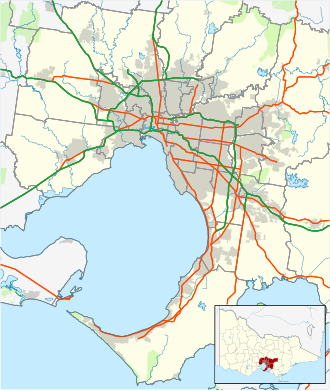
Mulgrave is located 21 kilometres south-east of Melbourne's central business district.