Geography
2 min
Mulgrave Suburb History and Geography
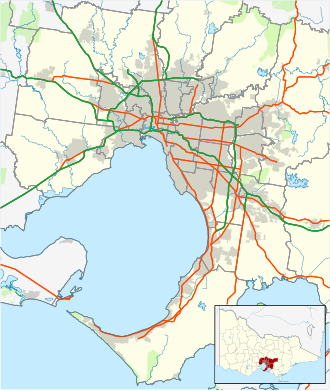
Mulgrave is located 21 kilometres south-east of Melbourne's central business district.
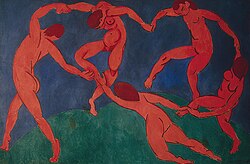
Late modernism is a term used across the visual arts and literary studies to describe creative production that emerged or continued following the developments of high modernism, particularly intersecting with the periods before, during, and after World War II. Scholars and critics debate its exact boundaries, relationship to contemporary art, and points of divergence from postmodernism.
In the visual arts, late modernism generally encompasses artistic production from the aftermath of World War II through the early years of the twenty-first century. Critics often draw comparisons between late modernism and postmodernism, though significant distinctions remain. While contemporary art is the most widely used designation for work produced since the 1950s or 1960s, it functions as a broad umbrella category that includes artists working within modernist traditions alongside those who reject modernism entirely.
Art critics and philosophers have offered varied interpretations of this era. Arthur Danto, in After the End of Art, viewed contemporaneity as the broader framework in which postmodern objects form a subsector succeeding modernity. Other critics, such as Hilton Kramer, Robert C. Morgan, Kirk Varnedoe, and Jean-François Lyotard, have analyzed how postmodern works relate to their modernist predecessors. Consensus generally points to a profound shift in the perception of art on the world stage since the 1960s, whether characterized as a transition into postmodernism or as a continuation of late modernist tendencies.
Late modernism describes movements that emerge from, react against, and develop the conceptual potential of earlier modernist trends. Traditional modernism often emphasizes formal purity, medium specificity, art for art's sake, authenticity, universal truth, and the importance of an avant-garde.
By contrast, postmodernism is frequently characterized by the rejection of modernism's grand narratives, an effort to blur boundaries between high and low art, and the employment of collage, fragmentation, irony, and parody. A primary theoretical distinction lies in their view of progress: modernism maintains a progressive stance favoring forward-looking, advanced works, whereas postmodern movements typically reject the notion of objective advancement or progression in artistic evolution.
In literary studies, late modernism refers to literature produced after World War II, though multiple chronological definitions exist. One common definition applies the term to works published between 1930 and the onset or conclusion of World War II. However, several prominent modernists continued publishing well past 1945. Figures such as T. S. Eliot and Basil Bunting published major works into the 1950s and 1960s, while authors like Samuel Beckett and James Baldwin have been categorized under late modernist frameworks.
Scholars debate whether late modernist literature differs fundamentally from pre-1930 modernist production. Some literary critics apply the term specifically to post-1945 writing shaped profoundly by the historical traumas of World War II, including the Holocaust and the introduction of nuclear weapons.
Late modernism refers to art and literature produced after the peak of high modernism, generally spanning the post-World War II era, which either continues modernist traditions or critically engages with them.
Late modernist poetics: From Pound to Prynne by Anthony Mellors; see also Prynne's publisher, Bloodaxe Books.
Ihab Hassan in Lawrence E. Cahoone, From Modernism to Postmodernism: An Anthology, Blackwell Publishing, 2003. p. 13. ISBN 0-631-23213-3
Michael Fried. "Ronald Davis: Surface and Illusion." Artforum, vol. 5, no. 8. April, 1967. pp. 37–41, Cover Illus.: Six-Ninths Blue, 1966
"Guggenheim Collection – Glossary – Process art". Archived from the original on 2007-09-27. Retrieved 2007-07-28.
Movers and Shakers, New York, "Leaving C&M", by Sarah Douglas, Art+Auction, March 2007, V.XXXNo7.
Simon Malpas, The Postmodern, Routledge, 2005. p. 20. ISBN 0-415-28064-8
Kirk Varnedoe, 1946–2003 – Front Page – Obituary – Art in America, Oct, 2003 by Marcia E. Vetrocq
Frederick Jameson in Hal Foster, Postmodern Culture, Pluto Press, 1985 (first published as The Anti-Aesthetic, 1983). p. 111. ISBN 0-7453-0003-0
Clement Greenberg: Modernism and Postmodernism Archived 2020-11-27 at the Wayback Machine, seventh paragraph of the essay. URL accessed on June 15, 2006
Tim Woods, Beginning Postmodernism, Manchester University Press, 1999. p. 125. ISBN 0-7190-5211-4
Mulgrave is located 21 kilometres south-east of Melbourne's central business district.
The violin octet consists of eight acoustically scaled bowed string instruments.
Goran Obradović was born on January 29, 1971.