C
Music History
2 min
Chronology and Eras in Western Classical Music History
Western classical music history is divided into eras based on stylistic shifts and changes in aesthetic taste.
Minimalist music is a form of art music and compositional practice characterized by the use of limited or minimal musical materials. Key features include repetitive patterns or pulses, steady drones, consonant harmony, and the gradual reiteration of musical phrases or smaller units. This approach often incorporates strict internal processes, such as phase shifting—resulting in phase music—or rule-governed structures known as process music. The style emphasizes a non-narrative and non-representational framework, directing the listener's focus toward the internal mechanics and acoustic phenomena of the performance.
The approach developed on the West Coast of the United States during the late 1950s and early 1960s, particularly around the San Francisco Bay Area, where composers such as La Monte Young, Terry Riley, and Steve Reich studied and worked. Early milestones included La Monte Young's 1958 composition Trio for Strings, which utilized sustained long tones and silences. The work of street musician and composer Moondog during the 1940s and 1950s also exerted an early influence on both Glass and Reich through its static counterpoint and steady pulses.
As these composers later relocated to the East Coast, their work became associated with the New York Downtown music scene, where critics initially categorized it under experimental music labels such as the New York Hypnotic School. Early supporters and collaborators included visual artists and galleries, linking musical minimalism directly with visual minimalist art movements.
The precise origin of the term "minimal music" remains subject to historical debate. Composer Steve Reich and scholars Jonathan Bernard and Dan Warburton have attributed the term to music critic Michael Nyman. Conversely, composer Philip Glass has suggested that critic Tom Johnson coined the phrase.
Alongside Young, Riley, Reich, and Glass, other foundational figures associated with American minimalism include John Adams, Dennis Johnson, Terry Jennings, Richard Maxfield, Pauline Oliveros, Phill Niblock, and James Tenney. Julius Eastman and John Lewis also contributed to the aesthetic through distinct intersections with jazz and multidisciplinary performance. In Europe, composers such as Louis Andriessen, Arvo Pärt, Henryk Górecki, and Michael Nyman incorporated minimalist traits into their respective regional traditions.
The instrumentation of minimalist works varied widely among its practitioners. The early compositions of Philip Glass and Steve Reich were generally austere, written for small, specialized ensembles. Glass frequently utilized organs, wind instruments (notably saxophones), and vocalists, whereas Reich focused heavily on percussion instruments and mallet ensembles. In contrast, later figures like John Adams adopted traditional European classical instrumentation, composing extensively for full symphony orchestras, string quartets, and solo piano.
Minimalist music is characterized by limited musical materials, repetitive pulses, steady drones, consonant harmonies, and strict process-driven techniques such as phase shifting.
Johnson 1994, 748.
Woolfe, Zachary (28 October 2016). "Minimalist Composer Julius Eastman, Dead for 26 Years, Crashes the Canon". The New York Times. Archived from the original on 23 February 2018. Retrieved 28 April 2018 – via NYTimes.com.
Harrison 1997, 47.
Bratby, R.: The Music of Jean Sibelius. Gramophpone
Fink 2005, p. 118.
Anderson 2013.
Johnson 1994, 744.
Fink 2005, 19
Michael Nyman, writing in the preface of Mertens' book refers to the style as "so-called minimal music" (Mertens 1983, 8).
"Minimalism in music has been defined as an aesthetic, a style, and a technique, each of which has been a suitable description of the term at certain points in the development of minimal music. However, two of these definitions of minimalism—aesthetic and style—no longer accurately represent the music that is often given that label." Johnson 1994, 742.
Western classical music history is divided into eras based on stylistic shifts and changes in aesthetic taste.
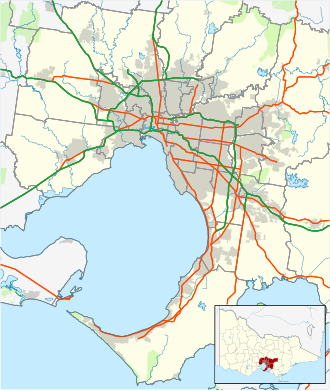
Mulgrave is located 21 kilometres south-east of Melbourne's central business district.
The violin octet consists of eight acoustically scaled bowed string instruments.