Geography
2 min
Mulgrave Suburb History and Geography
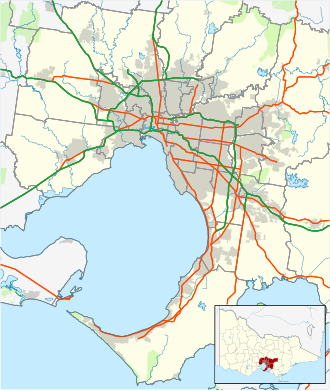
Mulgrave is located 21 kilometres south-east of Melbourne's central business district.
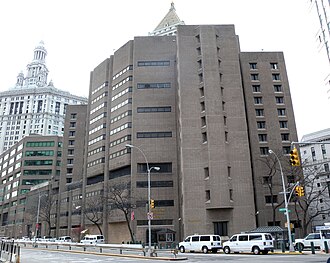
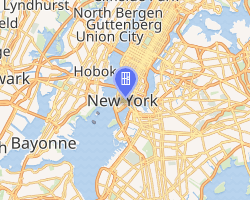
The Metropolitan Correctional Center, New York (MCC New York) was a prominent federal administrative detention facility located in the Civic Center neighborhood of Lower Manhattan. Situated on Park Row, directly behind the Thurgood Marshall United States Courthouse at Foley Square, the facility served as a primary site for holding individuals awaiting trial in the United States District Court for the Southern District of New York. Operated by the Federal Bureau of Prisons (BOP), the facility was officially closed in 2021 due to deteriorating infrastructure.
Opened in 1975, MCC New York represented a significant shift in federal detention architecture as the first high-rise facility utilized by the Bureau of Prisons. The 12-story structure was designed to function as an extension of the adjacent federal courthouse, connected by a secure footbridge. The facility was organized into 10 self-contained housing units, each spanning two stories, which minimized the movement of inmates within the building.
Throughout its operation, the center held a diverse population of male and female inmates across various security levels. It became known for housing high-profile defendants, including organized crime figures, international terrorists, and individuals involved in major financial fraud cases. Due to the nature of the inmates held there, the facility employed stringent security protocols, leading some observers to describe its administrative segregation units as exceptionally restrictive.
Over the decades, the facility faced significant criticism regarding its operational capacity and physical state. Designed with a capacity of 449 inmates, the center frequently held a much larger population, reaching 796 inmates by 2017. Reports highlighted chronic understaffing, as well as severe maintenance issues including leaky plumbing, sewage problems, and pest infestations in certain units.
On August 26, 2021, the Federal Bureau of Prisons announced the temporary closure of the facility. At the time of the announcement, 233 inmates were housed at the site. The decision was prompted by the need to address long-standing structural and safety concerns that had rendered the building increasingly difficult to maintain to federal standards.
No, the facility has been inactive since August 2021, when the Federal Bureau of Prisons closed it to address significant infrastructure and maintenance issues.
Bosworth, Mary (2002). The US Federal Prison System. Thousand Oaks, CA: Sage Publications. p. 272. ISBN 9780761923046.
"New York warden reassigned after Jeffrey Epstein's death; two staffers placed on leave". USA Today. Archived from the original on August 13, 2019. Retrieved August 13, 2019.
Theoharis, Jeanne (August 16, 2019). "The Real Scandal of the MCC". The Atlantic. Archived from the original on August 18, 2019. Retrieved August 22, 2019.
Watkins, Ali; Ivory, Danielle; Goldbaum, Christina (August 17, 2019). "Inmate 76318-054: The Last Days of Jeffrey Epstein". The New York Times. Archived from the original on August 18, 2019. Retrieved August 17, 2019. Beyond its isolation, the wing is infested with rodents and cockroaches, and inmates often have to navigate standing water — as well as urine and fecal matter — that spills from faulty plumbing, accounts from former inmates and lawyers said. One lawyer said mice often eat his clients' papers.
Kouwe, Zachery (July 14, 2009). "Madoff Arrives at Federal Prison in North Carolina". The New York Times. Archived from the original on July 29, 2013. Retrieved March 14, 2013.
Coleman, Justine (May 13, 2020). "Manafort released to home confinement due to coronavirus concerns". The Hill. Retrieved July 30, 2026.
Leonnig, Carol D.; Davis, Aaron C. (August 15, 2019). "Autopsy finds broken bones in Jeffrey Epstein's neck, deepening questions around his death". The Washington Post. Archived from the original on December 2, 2019. Retrieved August 15, 2019.
Gearty, Robert (August 12, 2019). "Epstein's New York lockup rare place for inmate suicides, suicide attempts". Fox News. Archived from the original on May 25, 2021. Retrieved May 25, 2021.
"Ross Ulbricht, aka Dread Pirate Roberts, sentenced to life in federal prison for creating, operating 'Silk Road' website | ICE". www.ice.gov. May 29, 2015. Retrieved July 30, 2026.
Neumeister, Larry; Mustian, Jim; Sisak, Michael R. (August 12, 2019). "Federal New York lockup draws new scrutiny in Epstein death". Associated Press. Retrieved August 21, 2019.
Mulgrave is located 21 kilometres south-east of Melbourne's central business district.
The violin octet consists of eight acoustically scaled bowed string instruments.
Goran Obradović was born on January 29, 1971.