Geography
2 min
Mulgrave Suburb History and Geography
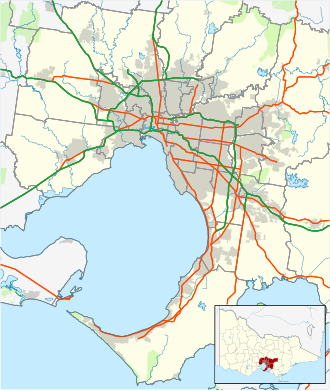
Mulgrave is located 21 kilometres south-east of Melbourne's central business district.
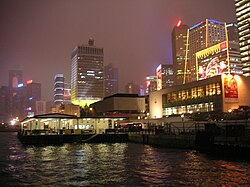
Queen's Pier was a significant public landmark located at Edinburgh Place in Central, Hong Kong. Named in honor of Queen Victoria, it served as a vital ceremonial gateway for the British colonial administration for over eight decades. The pier was not merely a transport hub but a symbolic site where governors and members of the British royal family arrived to mark their presence in the territory.
The site's history as a landing point dates back to the early 20th century. The original structure, known as the "Queen's Statue Wharf," was replaced in 1925 by a concrete and steel pier. This 1925 structure was designed to accommodate the arrival of the Prince of Wales, though construction delays pushed its completion to October of that year. It served as the primary ceremonial landing area for governors, including Cecil Clementi, the first governor to land there upon his arrival in November 1925.
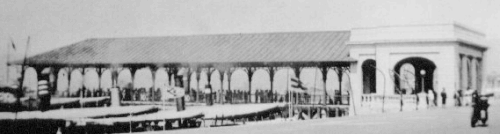
Following post-war reclamation efforts, the 1925 pier was demolished to make way for a new, modern structure. The 1954 pier, designed in a modern utilitarian style, featured a U-shaped plan with an open-sided superstructure. It was officially opened by Lady Maurine Grantham, wife of Governor Sir Alexander Grantham, on 28 June 1954. This structure became an integral part of the ceremonial cluster that included the nearby City Hall and Edinburgh Place.
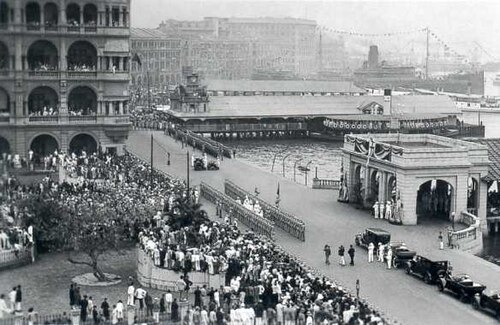
Throughout its existence, Queen's Pier functioned as the traditional landing place for incoming governors, who would arrive via the official Governor's Yacht. Following their arrival, they typically inspected a guard of honour at Edinburgh Place before proceeding to City Hall for their swearing-in ceremony. Notable royal visits included Queen Elizabeth II in 1975 and the Prince and Princess of Wales in 1989.
Beyond its ceremonial duties, the pier served the public as a docking point for pleasure craft and tour boats. It was also a popular recreational space for residents, serving as the finishing line for the annual cross-harbour swimming race until 1978.
The pier's fate became a focal point of public debate during the Central Reclamation project. Despite significant opposition from conservationists who sought to preserve the landmark, the government closed the pier on 26 April 2007. Efforts to halt the demolition through judicial reviews were unsuccessful, and the pier was completely dismantled by February 2008, with its base piles removed shortly thereafter.
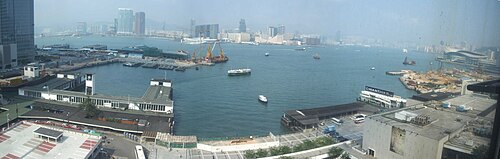
The pier was demolished to facilitate the Central Reclamation project, which aimed to create new land along the waterfront of Central, Hong Kong.
Audrey Parwani, "Anger over plan to dismantle pier", South China Morning Post, 27 March 2007, page B1
Antiquities Advisory Board. (2007). Minutes of the Antiquities Advisory Board 129th Meeting. Retrieved 9 April 2022, from https://www.aab.gov.hk/en/meetings/open-meetings/index_id_9.html?type=minutes&year=2007 Archived 7 June 2022 at the Wayback Machine.
星島日報 [Sing Tao Daily]. (10 May 2007). 孫公企硬 「皇后」一定搬 [Michael Suen stands firm on the relocation of the Queen’s Pier]. Retrieved 9 April 2022, from https://web.archive.org/web/20070718020838/http://hk.news.yahoo.com/070509/60/273s7.html.
"In Hong Kong, no looking back at Britain" Archived 10 October 2007 at the Wayback Machine, International Herald Tribune, 26 April 2007. Retrieved 8 May 2007
"Councils not told of third option before vote", Pg C3 South China Morning Post, 15 July 2008
Diana Lee, "Pier demolition cash bid gets nod" Archived 22 May 2011 at the Wayback Machine, 24 May 2007. Retrieved 7 August 2007
""Heritage conservation: Youth awaken to local identity, Varsity March 2007"". Archived from the original on 29 January 2009. Retrieved 6 September 2016.
Damon Pang, "Protesters spend one last night at Queen's Pier" Archived 22 May 2011 at the Wayback Machine, The Standard, 1 August 2007. Retrieved 7 August 2007
Damon Pang, "Antiquities backing to save Queen's Pier" Archived 22 May 2011 at the Wayback Machine, The Standard, 10 May 2007. Retrieved 7 August 2007
The Standard. (10 May 2007). Antiquities backing to save Queen’s Pier. Retrieved 10 April 2022, from https://web.archive.org/web/20110522040138/http://www.thestandard.com.hk/news_detail.asp?pp_cat=11&art_id=44107&sid=13530773&con_type=3&d_str=20070510&sear_year=2007.
Mulgrave is located 21 kilometres south-east of Melbourne's central business district.
The violin octet consists of eight acoustically scaled bowed string instruments.
Goran Obradović was born on January 29, 1971.