Geography
2 min
Mulgrave Suburb History and Geography
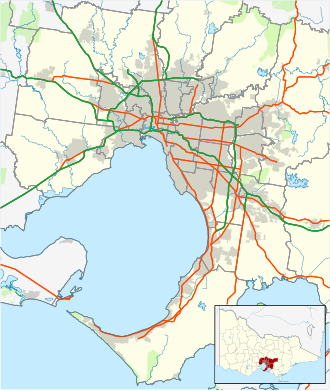
Mulgrave is located 21 kilometres south-east of Melbourne's central business district.
The Telecinema was a specialized cinema constructed specifically for the London South Bank Exhibition during the Festival of Britain in the summer of 1951. Located between Waterloo station and the Royal Festival Hall, the venue became one of the most popular attractions of the exhibition, drawing 458,693 visitors before closing its doors at the end of the festival.

The Festival of Britain Office commissioned architect Wells Coates to design a facility capable of screening 35mm film, stereoscopic 3-D films, stereophonic sound productions, and large-screen television broadcasts. Coates designed a grey, oblong structure using light steel framing with acoustic soundproofing. Contemporary film trade publications described the exterior design as featuring a distinct linear aesthetic with a modern facade. The auditorium originally accommodated 410 patrons, divided between stalls and balcony seating, while the foyer functioned simultaneously as an operational television studio. Although official publications and British Film Institute documents used the spelling Telecinema, the exterior signage on the building displayed Telekinema.
The venue was designed to showcase both traditional motion pictures and television broadcasting. Program presentations were organized by J.D. Ralph and R.J. Spottiswoode. The initial exhibition program featured a primary feature film alongside a selection of documentaries, experimental short subjects, and early stereoscopic 3-D films. To enhance audience immersion, the venue utilized advanced presentation techniques, including a borderless screen and a multi-channel loudspeaker setup positioned both behind the screen and throughout the auditorium.
Following strong public and press demand for the venue's retention after the conclusion of the Festival of Britain, negotiations took place involving the London County Council and the British film industry. The building was subsequently transferred to the British Film Institute (BFI) to operate as a members-only repertory cinema club. Re-equipped to seat 400 people with facilities for both 16mm and 35mm projection, it reopened in October 1952 as the National Film Theatre. The venue operated at this location until 1957, when the National Film Theatre relocated to permanent premises underneath Waterloo Bridge.
The Telecinema was built in 1951 for the Festival of Britain's London South Bank Exhibition.
Mulgrave is located 21 kilometres south-east of Melbourne's central business district.
The violin octet consists of eight acoustically scaled bowed string instruments.
Goran Obradović was born on January 29, 1971.