Geography and History
3 min
West Hartford Village, Vermont
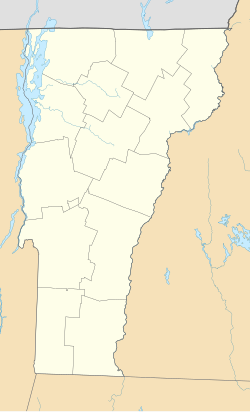
West Hartford is an unincorporated village located in the town of Hartford, Windsor County, Vermont.
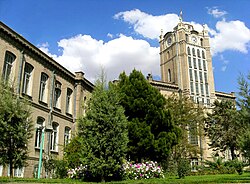
Tabriz is a major urban center located in the Central District of Tabriz County, serving as the capital of East Azerbaijan Province in northwestern Iran. Situated in the Quru River valley between the volcanic cones of the Sahand and Eynali mountain ranges, the city lies at an elevation ranging from 1,350 to 1,600 meters above sea level. It represents the sixth-most-populous city in Iran and functions as the primary economic hub and metropolitan area in the northwest of the country.
The population is predominantly bilingual, with inhabitants primarily speaking Iranian Azerbaijani as a native language alongside Persian as a second language. Historically, Tabriz has served as a pivotal administrative, commercial, and cultural center connecting Central Iran with the Caucasus and Eastern Anatolia.
The city occupies a valley that opens into a wide plain sloping gently toward the eastern shores of Lake Urmia, located approximately 60 kilometers to the west. Its proximity to regional borders places it about 130 kilometers from the frontiers of Armenia and the Republic of Azerbaijan. The surrounding topography features complex volcanic ridges, contributing to the presence of local thermal springs.
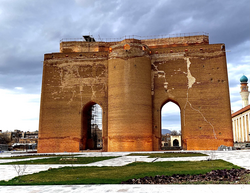
Archaeological evidence in the area includes an Iron Age graveyard discovered near the Blue Mosque, dating to the first millennium BCE. Historical records indicate references matching the region from the 8th century BCE, notably in Assyrian inscriptions associated with King Sargon II.
Throughout its history, Tabriz served as a capital or prominent administrative seat for various dynasties, including periods under Ilkhanid, Safavid, and Qajar rule. During the Qajar era, the city functioned as the traditional residence of the crown princes until 1925. Its geographical position near European trade routes made it an early center for modernizing movements in Iran during the 19th and early 20th centuries.
Tabriz is recognized as a major industrial center, supporting heavy industries such as automotive manufacturing, machine tools, oil refining, petrochemical processing, textiles, and cement production. Handicrafts remain a vital component of the local economy, particularly hand-woven carpets and traditional jewelry. In October 2015, the World Crafts Council designated Tabriz as a World Carpet Weaving City.
The city's cultural heritage includes the Grand Bazaar of Tabriz, a sprawling historical market complex inscribed as a UNESCO World Heritage Site. The local cuisine, confectionery, and dried nuts are widely recognized throughout Iran.
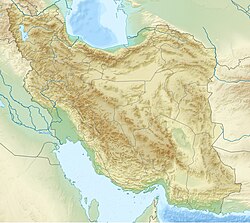
Tabriz is located in East Azerbaijan province in northwestern Iran.
سرشماري عمومي نفوس و مسكن 1385 : استان آذربایجان شرقی [General Population and Housing Census 2006: East Azerbaijan Province]. مرکز آمار ایران [Statistical Centre of Iran] (in Persian). Archived from the original (Excel) on 20 September 2011. Retrieved 25 September 2022.
Yigitcanlar, T.; Teimouri, R. (1 April 2018). "An approach towards effective ecological planning: Quantitative analysis of urban green space characteristics". Global Journal of Environmental Science and Management. 4 (2): 195–206. doi:10.22034/gjesm.2018.04.02.007. ISSN 2383-3572.
Rasmus Christian Elling, Minorities in Iran: Nationalism and Ethnicity after Khomeini, Palgrave 2013
"تبریز – صفحه اول". Archived from the original on 24 October 2015.
John A A Boyle (Editor), Persia: History and Heritage, Routledge, 2011, p:38
"Roshdiyeh Higher Education Institute of Tabriz". roshdiyeh.ir. Archived from the original on 2 December 2008.
"Form 32: Number of days with snow or sleet Station: Tabriz(40706)". Chaharmahalmet (asp). Iran Meteorological Organization. Archived from the original on 6 September 2014. Retrieved 28 March 2024.
"روزنامه سراسری عصر آزادی". Asreazadi.com. Archived from the original on 15 January 2012. Retrieved 11 February 2013.
"Islamic Republic news Agency". irna.ir. Archived from the original on 26 March 2013. Retrieved 11 February 2013.
"University College of Nabi Akram". ucna.ac.ir. Archived from the original on 30 September 2018. Retrieved 11 February 2013.
West Hartford is an unincorporated village located in the town of Hartford, Windsor County, Vermont.
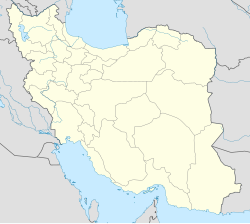
Zanjan serves as the capital city of Zanjan Province, Iran.
Khomarlu is the capital of Khoda Afarin County in East Azerbaijan Province, Iran.