Geography
2 min
Mulgrave Suburb History and Geography
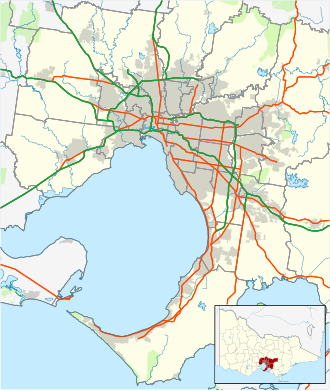
Mulgrave is located 21 kilometres south-east of Melbourne's central business district.

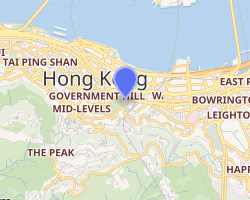
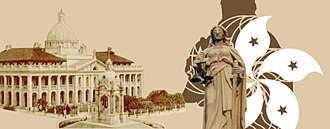
The High Court of the Hong Kong Special Administrative Region serves as a pivotal component of the territory's judicial system. It functions as a superior court of record, possessing unlimited jurisdiction in both civil and criminal matters. Historically known as the Supreme Court prior to the 1997 handover, the institution maintains its role as a key pillar of the common law system in Hong Kong.
The High Court is composed of two distinct divisions: the Court of Appeal and the Court of First Instance. It sits below the Court of Final Appeal in the judicial hierarchy and above the District Court and magistrates' courts. The court is authorized by the Hong Kong Basic Law and the High Court Ordinance.
Judicial officers within the High Court are appointed by the Chief Executive based on recommendations from the independent Judicial Officers Recommendation Commission (JORC). Eligibility requirements vary by position:
To ensure judicial independence, newly appointed judges who previously served as the Director of Public Prosecutions are subject to a six-month "sanitisation" period, during which they do not preside over criminal trials or government-related civil cases.
The Court of First Instance handles original jurisdiction cases, including serious criminal trials and major civil disputes, while the Court of Appeal hears appeals arising from the Court of First Instance and the District Court.
"Interception of Communications and Surveillance Ordinance (Cap. 589), Section 6". Archived from the original on 10 August 2022. Retrieved 2 December 2017.
"The Hon MRS Justice Doreen le Pichon GBS JA - Law, 1965". 29 January 2016. Archived from the original on 19 July 2018. Retrieved 22 February 2020.
Including retired English High Court Judges, such as Sir Richard Field who sat as a Deputy High Court Judge in Hong Kong and decided cases including Diyixian.com Limited v G'Five International Limited, HCA 229/2013, reported at [2016] 5 HKLRD 495.
"High Court Ordinance (Cap. 4), Section 12(1)". Archived from the original on 10 August 2022. Retrieved 2 December 2017.
This restriction does not apply to serving District Judges sitting as Deputy High Court Judges. For example, Her Honour Judge Amanda Woodcock has decided a number of judicial review cases (such as Hameed Bilal v Torture Claims Appeal Board, HCAL 174/2017), while Judge Kent Yee decided the habeas corpus case of Mohammad Aslam Qureshi v Director of Immigration, HCAL 75/2015. An exception is also made for Deputy High Court Judges (Non-refoulement Claims) when hearing judicial review cases relating to non-refoulement claims. Nor does this restriction apply to retired High Court Judges. For example, Sir Brian Keith (sitting as a Deputy High Court Judge) decided Building Authority v Appeal Tribunal (Buildings), HCAL 183/2015, reported at [2016] 1 HKLRD 1381. Previously, practitioners in private practice sitting as a Deputy High Court Judge could decide judicial review cases. For example, Robert Kotewall QC decided Chan Lau Fong & Others v Attorney General, HCMP 3232/1990.
"About Us". Archived from the original on 23 January 2010. Retrieved 20 September 2008.
"HKSAR Government Press Release: Appointment of Chairman of Electoral Affairs Commission". Retrieved 7 November 2022.
"Appointment of Vice-President of the Court of Appeal of the High Court". Archived from the original on 10 November 2019. Retrieved 19 February 2020.
Judicial Officers Recommendation Commission Ordinance (Cap. 92)
Buddle, Cliff (29 November 1997). "Former DPP among new judges". South China Morning Post. Archived from the original on 3 December 2017. Retrieved 3 December 2017.
Mulgrave is located 21 kilometres south-east of Melbourne's central business district.
The violin octet consists of eight acoustically scaled bowed string instruments.
Goran Obradović was born on January 29, 1971.