Geography
2 min
Mulgrave Suburb History and Geography
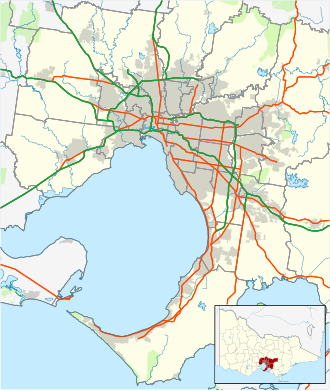
Mulgrave is located 21 kilometres south-east of Melbourne's central business district.
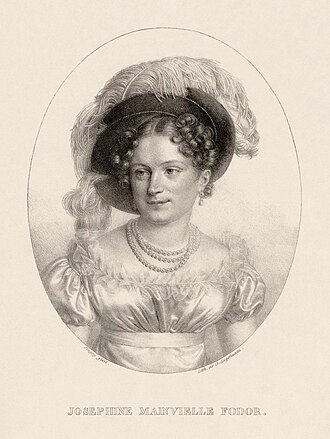
Geneviève Joséphine Fodor (1789 or 1793 – 1870), often referred to as Joséphine Fodor-Mainvielle, was a prominent French operatic soprano whose career spanned the early 19th century. Born in Paris to the composer and violinist Josephus Andreas Fodor and Louise Edme Marmet, she spent her formative years in Saint Petersburg, where her father served as a tutor to the imperial children. This early exposure to the Russian imperial court provided her with a rigorous musical foundation in both piano and harp.
Fodor made her professional stage debut in 1810 at the Impérial Opera of Saint Petersburg, performing in Giacomo Fioravanti's Le cantatrici villane. Her ability to perform in both Russian and French marked her as a versatile talent. In 1812, she married Jean-Baptiste Tharaud-Mainvielle, an actor at the French theatre in Saint Petersburg. The couple fled Russia during the French invasion, eventually returning to France.
Upon her return to Paris, Fodor secured an engagement with the Comédie-Italienne, debuting on 16 November 1814 in Ferdinando Paer's Griselda. Her reputation grew rapidly, leading to performances across major European cultural centers, including London and Venice. By 1819, she had returned to the Comédie-Italienne, where she gained acclaim for her roles in works such as Rossini's La gazza ladra, Mozart's Don Giovanni, and Cimarosa's Il matrimonio segreto.
Following a successful tour in Naples and Vienna, Fodor returned to Paris in 1825. However, she soon began to experience vocal difficulties, which necessitated a gradual withdrawal from the operatic stage. She spent her retirement in Passy and later in Limoges and Lyon, dedicating much of her time to charitable work. In 1857, she contributed to the field of vocal education by publishing Réflexions et conseils sur l'art du chant (Reflections and Advice on the Art of Singing). She passed away on 10 August 1870 in Saint-Genis-Laval. Her daughter, Henriette, also pursued a career as a professional singer.
She was a highly regarded operatic soprano in the early 19th century and later contributed to vocal pedagogy through her 1857 publication on the art of singing.
Notice BNF, Read online
Lafond, Paul (1910). L'aube romantique: Jules de Rességuier et ses amis. Paris: Mercure de France. p. 315.
Bulletin de la Société archéologique et historique du Limousin, 1894, Read online
Musicologie.org, biographie de Joséphine Fodor, Read online
Archives du Rhône, death act Read online.
Gehring, Franz (1900). "Fodor-Mainvielle, Josephine" . A Dictionary of Music and Musicians. Vol. 1.19. pp. 538–539.
Rochegude (Félix, marquis de), Promenades dans toutes les rues de Paris par arrondissements, 1910, Read online
Several books and references mention 1789, which corresponds to the year deducted from the age indicated in her death certificate, but most of the works published in the 19th century give priority to 1793. His birth certificate does not appear in the reconstituted Parisian civil register.
Otto Ebel, Les femmes compositeurs de musique. Dictionnaire biographique, 1910, Read online
Camille Dreyfus, La Grande encyclopédie, inventaire raisonné des sciences, des lettres et des arts, volume 22, Read online,
Mulgrave is located 21 kilometres south-east of Melbourne's central business district.
The violin octet consists of eight acoustically scaled bowed string instruments.
Goran Obradović was born on January 29, 1971.