Geography
2 min
Mulgrave Suburb History and Geography
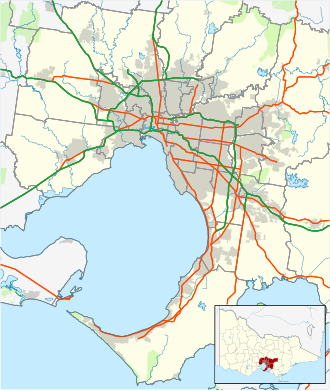
Mulgrave is located 21 kilometres south-east of Melbourne's central business district.

Incorporation is the legal process by which a business entity is established as a separate legal person, distinct from its owners or shareholders. By incorporating, a business becomes a corporation, which can enter into contracts, own property, sue, and be sued in its own name. This structure provides a framework for business operations that persists independently of the individuals involved in its management or ownership.
The primary effect of incorporation is the creation of a "corporate veil," which generally provides limited liability to shareholders. This means that the personal assets of the owners are typically protected from the debts and liabilities of the corporation. The corporation itself is responsible for its own obligations, and in the event of insolvency, shareholders generally risk only the capital they have invested in the business.
Incorporation also grants the entity perpetual existence, meaning the business can continue to operate regardless of the death, retirement, or withdrawal of its founders or shareholders. This stability is a key feature that distinguishes corporations from other business forms, such as sole proprietorships or general partnerships.
While requirements vary by jurisdiction, the process of incorporation typically involves filing formal documents with a government authority, such as a Secretary of State in the United States or a Registrar of Companies in the United Kingdom. These documents, often called Articles of Incorporation or a Certificate of Incorporation, define the company's name, purpose, and the structure of its share capital.
Companies are often required to appoint a registered agent to receive legal documents on their behalf. Additionally, corporations must adhere to ongoing compliance requirements, which may include maintaining corporate records, holding annual meetings, and filing periodic reports with regulatory bodies.
A corporation is typically governed by a board of directors, who are elected by the shareholders to oversee the company's strategic direction and management. The board delegates day-to-day operations to officers, such as a CEO or president. The rights and responsibilities of these parties are defined by corporate law and the company's internal bylaws.
Shareholders may hold different classes of stock, which can confer varying rights regarding voting, dividends, and liquidation preferences. This flexibility allows corporations to raise capital from diverse investors while maintaining control structures that suit the company's long-term goals.
The legal status of corporations has been shaped by significant judicial decisions. In the United States, cases such as Dartmouth College v. Woodward (1819) established the sanctity of corporate charters, while Santa Clara County v. Southern Pacific Railroad (1886) and later Citizens United v. FEC (2010) have addressed the constitutional rights and legal personhood of corporate entities.
The primary benefit is limited liability, which protects the personal assets of shareholders from the debts and legal obligations of the corporation.
"Spółka jawna". Spółka jawna - Polish Government Website. 26 June 2021. Retrieved May 3, 2024.
"State Corporation Departments: Interactive Map :: LawServer". LawServer. 2013-02-11. Archived from the original on 2013-02-11. Retrieved 2017-11-01.
Bank of Boston v. Belloti, 1978
"Understanding Classes of Stock". SCORE. 2019-06-30. Archived from the original on 2026-05-15. Retrieved 2026-05-15.
"Virginia SCC - Business Entity Names". Virginia State Corporation Commission. Archived from the original on 2026-05-15. Retrieved 2026-05-15. Stock Corporation names must include the word "company," "corporation," "incorporated," or "limited," or the abbreviation "Co.," "Corp.," "Inc." or "Ltd."
"municipal corporation". LII / Legal Information Institute. Retrieved 2026-05-14.
"Spółka komandytowa". Spółka komandytowa - Polish Government Website. 26 June 2021. Retrieved May 3, 2024.
"Code of Commercial Companies of Poland" (PDF). Polish Parliament Website. Retrieved May 3, 2024.
Loiseaux, Pierre R. (1972). "Liability of Corporate Shares to Legal Process". Duke Law Journal. 1972 (5): 947–965. doi:10.2307/1371834. JSTOR 1371834.
"Details on Private Limited Company". Businessdictionary.com. Archived from the original on 2013-11-13. Retrieved 2013-11-25.
Mulgrave is located 21 kilometres south-east of Melbourne's central business district.
The violin octet consists of eight acoustically scaled bowed string instruments.
Goran Obradović was born on January 29, 1971.