O
Publishing
2 min
Observer (American Digital Media Company)
The New York Observer was established on September 22, 1987, by Arthur L. Carter.
The printer's key, also frequently referred to as the number line, is a line of text printed on a book's copyright page, typically located on the verso of the title page in English-language publishing. It serves to indicate the specific print run or impression of a particular edition. While various conventions appeared around the middle of the 20th century, the practice became widespread after 1970.

Typically, the printer's key consists of a sequence of non-repeating characters, which can be numbers or letters. However, its structure and presentation are not entirely uniform across different publishers.
The sequence may run in either descending or ascending order. In some instances, rather than following a unidirectional sequence, the numbers alternate from left to right to keep the remaining digits relatively centered on the page during subsequent printings. Number lines may also include a two-digit consecutive-year code to designate the year of the impression.
When book production is outsourced, a code identifying the contracting printing company may occasionally be incorporated into the sequence alongside the impression indicators.
In traditional publishing methods, key characters are systematically removed rather than added during reprints. In letterpress printing, each character was an individual metal block, allowing the printer to lift out the relevant block from the form while leaving the rest of the text intact. With Linotype slugs, the lowest character could be filed off, and in offset printing using metal plates, characters could be erased. This subtractive method required minimal changes to the printing plate, reducing production costs for publishers.
The advent of computer-to-plate typesetting and digital printing transformed the production of books. Because plates or digital files can be easily re-imaged rather than physically altered by erasing or removing individual characters, publishers have adopted various modern key configurations.
Bibliographers generally define a first edition as all printings originating from substantially the same typesetting, regardless of how many subsequent printings occur. Conversely, book collectors often use the term first edition specifically to mean the first printing of the first edition.
A printer's key, or number line, is a sequence of numbers or letters printed on a book's copyright page to indicate the printing or impression number of that specific edition.
Stop Counterfeit Books 2022, § "D".
Levy & Mole 2017, pp. 17–22, § "Making Printed Books".
Although a number line's date segment (if it exists) follows the changes in the print run sequence, it may not necessarily change at the same rate or the same time.
Rennicks 2021, § "How Can You Tell if a Book is a First Edition?"; Ahearn & Ahearn 2011, "First Edition Identification By Publisher". Retrieved 2022-08-24 – via Google Books (limited preview).
Boutell 1949, p. [ix], § "Explanatory note to the Original Edition".
Duncan & Smyth 2019, p. 64.
Stop Counterfeit Books 2022.
Carter 1995, pp. 84–85, § "Edition and Impression".
Ahearn & Ahearn 2011, § "First Edition Identification". Retrieved 2022-08-24 – via Google Books (limited preview).
Boutell 1949, p. 26, § "Thomas Y. Crowell Company" ¶ "1947 Statement".
The New York Observer was established on September 22, 1987, by Arthur L. Carter.
Art and Auction was established in 1979.
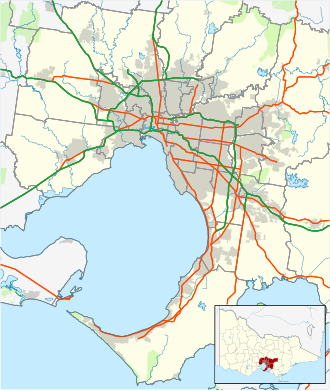
Mulgrave is located 21 kilometres south-east of Melbourne's central business district.