L
Renaissance Humanism
2 min
Lorenzo Valla
Lorenzo Valla was a central figure in the Italian Renaissance, known for his mastery of Latin and Greek.
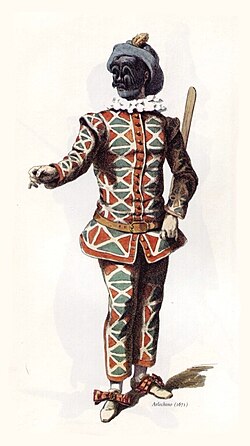
Zanni is a foundational character archetype in the Italian commedia dell'arte, representing the quintessential dispossessed servant or immigrant worker. Emerging as early as the 14th century in the Lombard-Venetian region, the character serves as a primary driver of plot, often embodying a complex duality of wit and stupidity. The English word zany, denoting someone eccentric or clownish, is derived directly from this character type.
The name Zanni is a regional variant of Gianni, commonly used in the countryside to refer to laborers who migrated to cities like Venice to serve wealthy merchants and nobles. Over time, the term evolved from a specific character name into a technical designation for all servant roles within the commedia tradition. As the genre matured, the archetype branched into various specialized characters, including Harlequin (Arlecchino), Brighella, Pulcinella, and Truffaldino.
In the development of commedia dell'arte, the Zanni archetype split into two distinct performance styles, often referred to as the 'first' and 'second' Zanni.
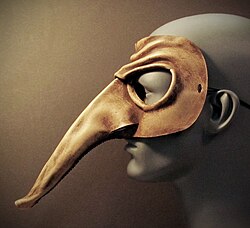
The Zanni is defined by a powerful survival instinct and an insatiable hunger. In performance, the character is physically demanding, requiring the actor to be highly acrobatic—capable of somersaults, stilt-walking, and complex dance movements. The mask worn by the actor is a critical component; traditionally, the length of the nose on the mask was inversely proportional to the character's intelligence, with longer noses signifying greater foolishness.
The first Zanni (il furbo) is clever, cynical, and drives the plot through schemes, while the second Zanni (lo stupido) is clumsy, dull-witted, and provides comic relief.
Nicoll 1963, p. 266.
Oreglia 1968, p. 57.
Gordon 1983, p. 11.
Duchartre 1966, p. 32.
A famous example is the Truffaldino in A Servant of Two Masters by Goldoni.
Hartnoll 1983, p. 313.
Rudlin 2002, p. 69.
Gordon 1983, p. 32.
Nicoll 1963, p. 265.
Oreglia 1968, p. 11.
Lorenzo Valla was a central figure in the Italian Renaissance, known for his mastery of Latin and Greek.
David Fox was born in Swastika, Ontario, in 1941.
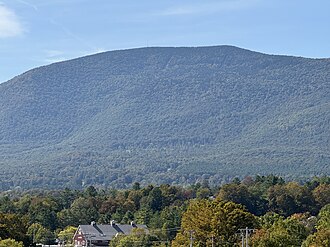
Mount Equinox is the highest peak in the Taconic Range.