T
Religion
2 min
The Anglican Digest
The Anglican Digest was founded in 1953 as the Episcopal Book Club by Howard Lane Foland.
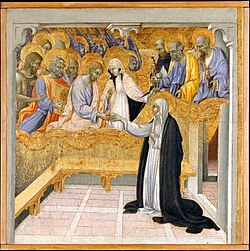
A third order consists of lay members or secular clergy of Christian religious orders who do not typically live in a communal monastic environment, yet are permitted to wear the religious habit and share in the spiritual works and privileges of a larger order. This structural division is recognized across several Christian traditions, including Latin Catholicism, Lutheranism, and Anglicanism.

The nomenclature of religious orders established during the high medieval period typically reflects a three-tiered hierarchy. The first order comprises male religious (such as friars or monks), the second order consists of enclosed nuns, and the third order is formed by lay individuals or secular clergy living in the world.
Members of a third order are known as tertiaries (from the Latin tertiarii, meaning "third"). Tertiaries follow a specific Rule adapted for secular life, though some may choose to form structured communities, known as the third order regular.
The roots of third orders extend back to medieval monastic confraternities, where lay benefactors and emperors were affiliated with abbeys to share in their spiritual merits. However, the distinct movement of tertiaries arose during the 12th and 13th centuries as part of a broader lay reform movement seeking to emulate the apostolic life.
The Humiliati are often cited as precursors in the 12th century, followed closely by the massive growth of the Franciscan Third Order under Saint Francis of Assisi. Over time, other major religious families—including Dominicans, Carmelites, Servites, and Augustinians—established their own third orders, providing frameworks for individuals to integrate strict spiritual discipline with ordinary secular vocations.
Under Roman Catholic canon law, third orders are associations whose members share the spirituality of a religious institute while remaining in secular life, striving for Christian perfection under the guidance of that institute. Following the Second Vatican Council, the role of lay vocations experienced renewed emphasis, highlighting the sanctification of ordinary daily life, professional work, and family responsibilities as a primary expression of the tertiary calling.
Monks and nuns belong to the first or second orders, taking formal religious vows and living communally in a monastery or convent. Tertiaries typically live in secular society, maintain ordinary jobs or family lives, and follow a modified rule adapted to the world.
Brady, Ignatius Charles; Cunningham, Lawrence (29 September 2020). "St. Francis of Assisi". Encyclopædia Britannica. Encyclopædia Britannica, Inc. Retrieved 5 October 2020.
"Brothers & Sisters". Anglican Order of Preachers. Retrieved 15 May 2018.
"Franciscan Spirituality". Franciscan Action. Retrieved 22 April 2026.
"Third Order of Franciscans". Third Order of Franciscans.
Cf. Angelus a S.S. Corde, O.C.D., "Manuale juris communis Regularium", Ghent, 1899, q. 1067
"Trinitarian laity", Order of the Most Holy Trinity and of the Captives
Baber, Edward Cresswell (1911). "Tertiaries". In Chisholm, Hugh (ed.). Encyclopædia Britannica. Vol. 26 (11th ed.). Cambridge University Press. pp. 660–661.
Swidler, Leonard J.: The Ecumenical Vanguard: The History of the Una Sancta Movement Archived 2007-08-13 at the Wayback Machine
"The Order of Saint Andrew: An Anglican ecumenical religious order of both men and women, single and married". www.osa-anglican.org. Retrieved 5 September 2019.
(in German) "Diese 1921 gegründete Gemeinschaft geht auf Impulse Freidrich Heilers zurück" http://www.kommunitaeten.de/komm/kom82.htm Archived 2007-02-11 at the Wayback Machine
The Anglican Digest was founded in 1953 as the Episcopal Book Club by Howard Lane Foland.
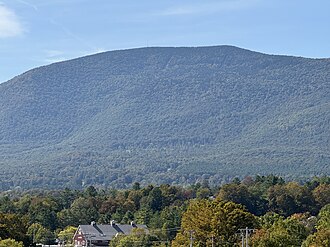
Mount Equinox is the highest peak in the Taconic Range.
Founded in 1926 as the South Island Motor Union (SIMU).