Archaeology
2 min
Trajan's Wall
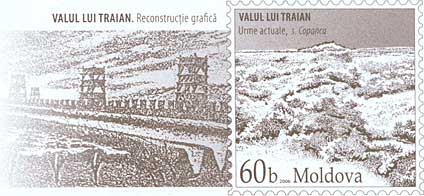
Trajan's Wall is a misnomer; the fortifications were built long after the reign of Emperor Trajan, primarily during the Early Middle Ages.
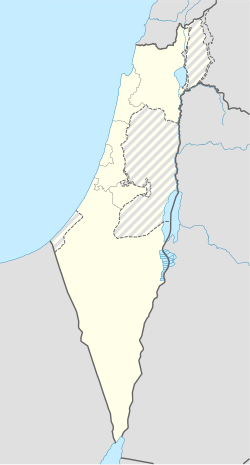
Shivta (Hebrew: שבטה), historically known as Sobata in Greek or Subeita in Arabic, is an ancient city situated in the Negev Desert of Israel, approximately 43 kilometers southwest of Beersheba. Designated as a UNESCO World Heritage Site in June 2005 alongside Haluza, Avdat, and Mamshit, Shivta forms an integral component of the Incense Route and the Desert Cities of the Negev.
While long classified by researchers as a classical Nabataean town positioned along ancient spice trading networks, contemporary archaeological perspectives increasingly suggest that Shivta functioned primarily as a Byzantine agricultural colony and a transit way station for Christian pilgrims traveling toward Saint Catherine's Monastery in the Sinai Peninsula.
Evidence from the Roman period remains sparse at the site, though structural ruins dating back to the first century BCE have been unearthed within the southern section of the town. The vast majority of visible archaeological remains, however, belong to the later Byzantine era.
During the Byzantine period, Shivta flourished as an organized settlement featuring three distinct churches, dual wine-presses, expansive residential quarters, and civic administrative buildings. Water management was vital to survival in the arid environment, relying heavily on surface runoff collected into massive underground cisterns and reservoirs.
The religious architecture of the town is notable for its artistic preservation. The southern church features faint traces of a mural depicting Christ's transfiguration within its apse. Meanwhile, the northern church contains the remains of a colorful 6th-century mosaic alongside a unique, beardless artistic representation of Jesus.
The discovery of sophisticated wine presses provides concrete evidence of massive agricultural output during antiquity. Archaeologists estimate that the settlement produced roughly two million liters of wine at its peak. In the early 6th century, regional grape cultivation experienced a major economic boom to satisfy high domestic and international demand for vinum Gazentum, commonly known as Gaza wine, exported throughout the Mediterranean via the port of Gaza.
This commercial zenith was abruptly disrupted in the mid-6th century by global climatic shifts known as the Late Antique Little Ice Age and the arrival of the Justinianic Plague. International luxury trade severely contracted, prompting a shift away from wine monoculture toward subsistence farming focused on staple grains such as barley and wheat. Following the Islamic conquest in the 7th century, the local population gradually declined until the settlement was completely abandoned around the 8th or 9th century CE.
Shivta is an ancient desert city located in the Negev Desert of Israel, recognized for its remarkably preserved Byzantine-era ruins, agricultural infrastructure, and churches.
Röhl (2010), p. 16
Röhl (2010), p. 14
"Nabatean Farms Reconstructed in the Desert". The BAS Library. Retrieved 5 April 2026.
"No sour grapes", Deborah Rubin Fields for The Jerusalem Post, 17 February 2011, partially accessed 5 August 2020 (subscription required)
Röhl (2010), pp. 6ff.
Segal, Arthur (1 January 1985). "Shivta-A Byzantine Town in the Negev Desert". Journal of the Society of Architectural Historians. 44 (4): 317–328. doi:10.2307/990111. JSTOR 990111.
Röhl (2010), p. 2
Tchekanovets, Yana; Tepper, Yotam; Bar-Oz, Guy (2017). "The Armenian Graffito from the Southern Church of Shivta". Revue Biblique. 124 (3): 446–454. doi:10.2143/RBI.124.3.3245468.
Röhl (2010), pp. 14-15
Tepper, Yotam and Bar-Oz, Guy. Shivta: Preliminary Report. Hadashot Arkheologiyot – Excavations and Surveys in Israel (HA-ESI) Volume 132 Year 2020, Israel Antiquities Authority. Retrieved 24 November 2021.
Trajan's Wall is a misnomer; the fortifications were built long after the reign of Emperor Trajan, primarily during the Early Middle Ages.
David Ussishkin was born in Jerusalem in 1935 and is a professor emeritus at Tel Aviv University.
The Museum at the Lowest Place on Earth is located in Ghor es-Safi, Jordan.