Documentary Film
2 min
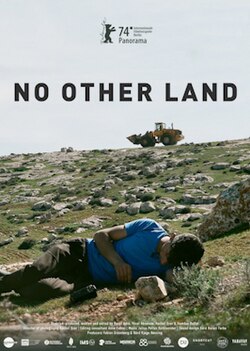
Masafer Yatta: A Documentary of Displacement
The film was directed by a collective of four activists: Basel Adra, Hamdan Ballal, Yuval Abraham, and Rachel Szor.
Shechem was an ancient city located in the Southern Levant, historically significant as a major economic, political, and religious center. Mentioned in ancient Egyptian texts from the 19th century BC and the Amarna letters from the 14th century BC, the city held a strategic location in a narrow valley separating Mount Ebal and Mount Gerizim. Today, the archaeological site is identified with Tell Balata, situated adjacent to the modern city of Nablus in the West Bank.
Occupying a crucial crossroads on the hill-country route connecting northern and southern regions, Shechem flourished due to fertile agricultural land and an abundance of natural water springs. Its name, derived from the Semitic root for shoulder or saddle, reflects its positioning relative to the surrounding mountainous terrain.
The earliest settlement at Shechem dates back to the Chalcolithic period around 3500–3000 BC. Substantial urbanization began during the Middle Bronze Age IIA (circa 1900 BC), when it transformed into a fortified Canaanite stronghold. Archaeological excavations at Tell Balata have revealed massive defensive structures, including the Temenos Wall and a series of courtyard temples that display Syrian architectural influences.
In the Hebrew Bible, Shechem is described as the first capital of the northern Kingdom of Israel following the division of the United Monarchy. Although it declined following the collapse of the northern kingdom, the city experienced a revival during the Hellenistic period, emerging as a prominent religious and cultural center for the Samaritans.
Shechem occupied a vital geographical position in the hill country of Ephraim. Hemmed in by Mount Ebal to the north and Mount Gerizim to the south, the valley functioned as a natural mountain pass and a key thoroughfare for merchants traveling along the central ridge route of the Levant.
Ancient Shechem is identified with Tell Balata, situated in the modern West Bank adjacent to the city of Nablus, in the valley between Mount Ebal and Mount Gerizim.
Edward F. Campbell, Shechem III: The Stratigraphy and Architecture of Shechem/Tell Balâtah. Vol. 1. Text. Vol. 2. The Illustrations, American Schools of Oriental Research, 2002, ISBN 978-0-89757-062-6
Becking, 2001, p. 52.
"Uncovering the Bible's Buried Cities: Shechem | ArmstrongInstitute.org". armstronginstitute.org. Retrieved 21 July 2026.
Cole, Dan P. (1984) Shechem I : the Middle Bronze IIB pottery
Tell Balata Archaeological Park: guidebook. Palestine. Ministry of Tourism and Antiquities. 2014 unesco.org
Procopius, Buildings, v, 7
"I Book of Kings 12:25". Archived from the original on 12 November 2016. Retrieved 16 July 2010.
Joshua 21:21
Joshua 24:1–27
Muller, Asien und Europa, p. 394, Leipzig, 1893.
The film was directed by a collective of four activists: Basel Adra, Hamdan Ballal, Yuval Abraham, and Rachel Szor.
B'Tselem was founded in February 1989 by a group of Israeli lawyers, doctors, academics, and Knesset members during the First Intifada.
Qaddura Refugee Camp was established in the year 1948 following the Arab-Israeli War.