History
2 min
Global Developments and Geopolitical Shifts in Early 2019
The Chinese Chang'e 4 probe achieved the first-ever landing on the far side of the Moon on January 3, 2019.
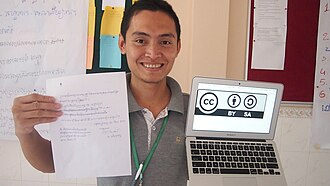
Open content, often referred to as free or libre content, encompasses creative works—including literature, software, music, and imagery—that are made available under legal frameworks allowing for the study, modification, and distribution of the material with minimal restrictions. Unlike traditional proprietary works, which are governed by restrictive copyright, open content is designed to facilitate collaboration and the expansion of the digital commons.
In most jurisdictions, the Berne Convention establishes that copyright is granted to creators by default. To make a work "open," an author must explicitly release it under a specific license. These licenses function as a legal bridge, granting users freedoms—such as the right to copy or adapt the work—while often retaining certain obligations, such as the requirement to provide attribution to the original creator.

Works that are not subject to copyright, either because the term has expired or because they were never eligible, reside in the public domain. In contrast, copyleft is a strategic use of copyright law designed to ensure that a work and its derivatives remain free for all users. By requiring that modified versions be distributed under the same terms as the original, copyleft prevents the enclosure of shared knowledge.

While various definitions exist, the core philosophy of open content aligns with the "Definition of Free Cultural Works." Organizations like the Open Knowledge Foundation emphasize that "open" implies the ability for anyone to access, use, and share information without discrimination. This movement shares ideological roots with the free software and open-source software communities, often utilizing standardized licensing frameworks such as Creative Commons (CC BY, CC BY-SA, and CC0) to codify these permissions.
No. Public domain works have no copyright protection, whereas open content is still copyrighted but is released under a license that grants users specific freedoms.
Liang, Lawrence (2007). "Free/Open Source Software Open Content" (PDF). Asia-Pacific Development Information Programme: e-Primers on Free/Open Source Software. United Nations Development Programme – Asia-Pacific Development Information Programme. Archived (PDF) from the original on 22 March 2012. Retrieved 23 June 2012.
"Definition of Free Cultural Works". freedomdefined.org. Retrieved 10 July 2026. Copies may be sold, swapped or given away for free, as part of a larger work, a collection, or independently. There must be no limit on the amount of information that can be copied. There must also not be any limit on who can copy the information or on where the information can be copied.
"OnlineOpen". Archived from the original on 27 April 2011. Retrieved 10 April 2009.
OpenContent is officially closed. And that's just fine. on opencontent.org (30 June 2003, archived)
Dusollier, S (2003). "Open source and copyleft. Authorship reconsidered?". Columbia Journal of Law and the Arts. 26 (296).
"What is Copyright? | U.S. Copyright Office". www.copyright.gov. Archived from the original on 28 May 2025. Retrieved 28 May 2025.
"Policy of the Society for General Microbiology towards author self-archiving on PubMed Central and institutional and other repositories". Archived from the original on 26 May 2011. Retrieved 10 April 2009.
Möller, Erik; et al. (2008). "Definition of Free Cultural Works". 1.1. freedomdefined.org. Archived from the original on 18 August 2016. Retrieved 20 April 2015.
Stutz, Michael (1997). "Applying Copyleft To Non-Software Information". www.gnu.org. Free Software Foundation. Archived from the original on 26 December 2011. Retrieved 20 March 2024.
"Costs and business models in scientific research publishing: A report commissioned by the Wellcome Trust" (PDF). Archived from the original (PDF) on 19 February 2009. Retrieved 23 May 2009.
The Chinese Chang'e 4 probe achieved the first-ever landing on the far side of the Moon on January 3, 2019.
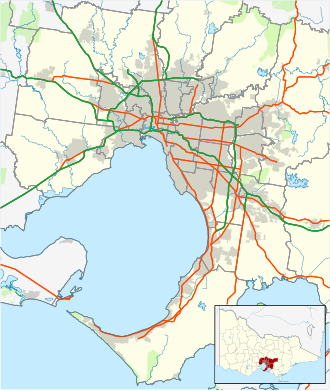
Mulgrave is located 21 kilometres south-east of Melbourne's central business district.
The violin octet consists of eight acoustically scaled bowed string instruments.