Cinema
2 min
Unforgiven: A Revisionist Masterpiece of the Western Genre
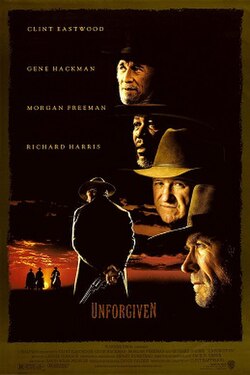
Unforgiven won four Academy Awards, including Best Picture and Best Director.
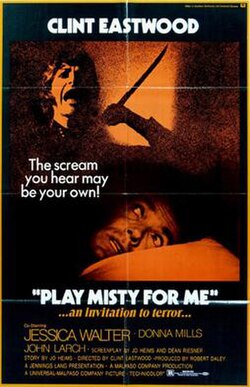
Play Misty for Me (1971) is a seminal American psychological thriller that marked the directorial debut of Clint Eastwood. Set against the atmospheric backdrop of Carmel-by-the-Sea, California, the film explores themes of obsession, stalking, and the fragility of personal boundaries. It is widely regarded as a significant entry in the neo-noir genre and a pivotal moment in Eastwood's transition from a screen icon to a prolific filmmaker.
The narrative centers on Dave Garver, a late-night radio disc jockey at KRML in Carmel-by-the-Sea. Garver frequently incorporates jazz music and poetry into his broadcasts. His life takes a dark turn after he encounters a listener named Evelyn Draper, who repeatedly calls the station to request the jazz standard "Misty." What begins as a casual, consensual sexual encounter quickly devolves into a nightmare as Evelyn exhibits signs of severe emotional instability and obsessive behavior. As Garver attempts to distance himself, Evelyn's actions escalate from harassment to physical violence, ultimately threatening the lives of those closest to him, including his ex-girlfriend, Tobie Williams.
Produced by The Malpaso Company and distributed by Universal Pictures, the film was a low-budget production, costing approximately $725,000. Eastwood's decision to direct the film was influenced by his desire for greater creative control, a sentiment he developed after years of observing various directors during his acting career. The screenplay, penned by Jo Heims and Dean Riesner, was noted for its tension-building and its effective use of the California coastal setting. The film also features authentic footage from the 1970 Monterey Jazz Festival, incorporating performances by notable musicians such as Cannonball Adderley and Joe Zawinul.
Upon its release on October 20, 1971, the film achieved both critical and commercial success, grossing over $10.6 million. Jessica Walter's performance as the antagonist, Evelyn Draper, received widespread acclaim for its intensity and psychological depth, earning her a Golden Globe nomination for Best Actress in a Motion Picture – Drama. The film is frequently cited by critics for its influence on the "stalker" subgenre of thrillers that gained popularity in subsequent decades.
No, the film is a work of fiction. The screenplay was written by Jo Heims and Dean Riesner.
Osenlund, R. Kurt (October 13, 2012). "15 Famous Movie Psychopaths". Slant Magazine. Retrieved March 8, 2025.
Patrick McGilligan (July 23, 2014). Clint: The Life and Legend. OR Books, LLC. pp. 138–. ISBN 978-1-939293-97-8. Archived from the original on June 11, 2020. Retrieved October 31, 2016.
"50 Top-Grossing Films". Variety. November 3, 1971. p. 11.
"Play Misty for Me, Box Office Information". The Numbers. Archived from the original on October 22, 2014. Retrieved June 24, 2012.
"Play Misty For Me Blu-ray". Blu-ray.com. July 27, 2020. Archived from the original on July 27, 2020. Retrieved July 27, 2020.
Elliot, Marc (2009). American Rebel: The Life of Clint Eastwood. Harmony Books. p. 123. ISBN 978-0-307-33688-0.
Play Misty For Me at Rotten Tomatoes
Janet Wirth-Cauchon (2001). Women and Borderline Personality Disorder: Symptoms and Stories. Rutgers University Press, ISBN 9780813528915
Hughes, Howard (2009). Aim for the heart: the films of Clint Eastwood (1st ed.). London, England: I.B. Tauris & Co. Ltd. ISBN 978-0-85773-047-3.
"Play Misty For Me Blu-ray". Blu-ray.com. November 10, 2015. Archived from the original on July 27, 2020. Retrieved July 27, 2020.
Unforgiven won four Academy Awards, including Best Picture and Best Director.
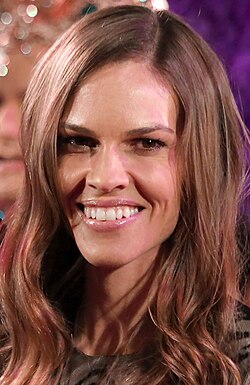
Million Dollar Baby grossed $216,763,646 worldwide during its theatrical run.
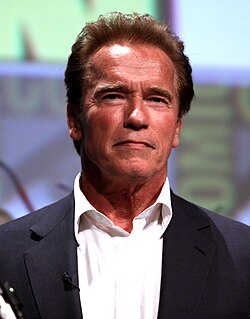
Cry Macho was directed by and starred Clint Eastwood, marking one of his final performances in a feature film.