Geography of Vermont
3 min
The Taconic Range's Highest Peak: A Profile of Mount Equinox
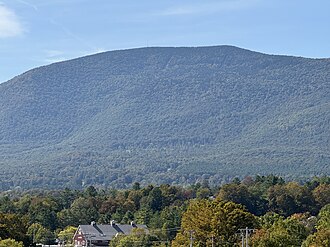
Mount Equinox is the highest peak in the Taconic Range.
The Oʼodham (also historically referred to as Upper Oʼodham, Upper Pima, or Pima Alto) are a group of Native American peoples whose traditional homeland spans the Sonoran Desert in southern and central Arizona in the United States and northern Sonora in Mexico. United by a common heritage language known as the Oʼodham language, the group comprises several distinct communities, most notably the Akimel Oʼodham, the Tohono Oʼodham, and the Hia C-eḍ Oʼodham. In the Oʼodham language, the word literally translates to 'person', 'man', or 'human being'.
Archaeological evidence generally indicates that the Oʼodham are descendants of the ancient Hohokam culture, which flourished in the region through sophisticated canal irrigation systems in the desert valleys. By the late 17th century, Spanish explorers documented numerous Oʼodham rancherías and farming settlements along major regional waterways, such as the Santa Cruz River, San Pedro River, Gila River, and Salt River valleys.
Scholars and the communities themselves traditionally divide the Oʼodham into major branches based on geographic, cultural, and linguistic distinctions:

The Oʼodham language belongs to the Uto-Aztecan language family. While distinct dialectal and lexical variations exist among the different groups—particularly regarding modern innovations and terms for new technologies—the speech varieties remain mutually intelligible across all Oʼodham communities.
In the Oʼodham language, the word translates directly to 'person', 'man', or 'human being'.
Sheridan, Thomas E. (30 March 2006). Landscapes of Fraud: Mission Tumac‡cori, the Baca Float, and the Betrayal of the Oʼodham. University of Arizona Press. ISBN 978-0-8165-2513-3.
Gary Paul Nabhan: Gathering the Desert, University of Arizona Press, ISBN 978-0-8165-1014-6
Alternate spellings include: Oʼodaam, Ootoma, or Odami.
Roca, Paul M. (1967). Paths of the Padres Through Sonora: An Illustrated History & Guide to Its Spanish Churches. Arizona Pioneers' Historical Society. p. 56. Retrieved 9 December 2024.
https://www.srpmic-nsn.gov/history_culture/oodham/
Castetter, Edward F.; Bell, Willis H. (1942). Pima and Papago Indian Agriculture. Albuquerque: The University of New Mexico Press.
Carl Waldman (2006). Encyclopedia of Native American tribes. Infobase Publishing. p. 4. ISBN 978-0-8160-6274-4. Retrieved November 22, 2011.
Papago Local Groups and Defensive Villages, Period 1859–1890. Underhill 1939, S. 211–234.
"Place Names". www.nps.gov. National Park Service. Archived from the original on September 1, 2010. Retrieved 22 May 2024.
Because of dialect variations, both groups of the Hia C-eḍ Oʼodham are sometimes known as Amargosa Areneños or Amargosa Pinacateños
Mount Equinox is the highest peak in the Taconic Range.
Founded in 1926 as the South Island Motor Union (SIMU).
The Hungarian water polo system operates on a hierarchical pyramid model with promotion and relegation.