Cinema
2 min
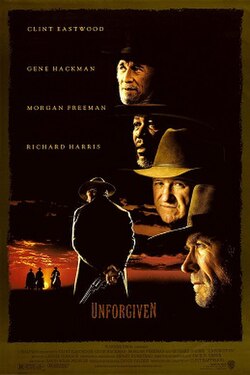
Unforgiven: A Revisionist Masterpiece of the Western Genre
Unforgiven won four Academy Awards, including Best Picture and Best Director.
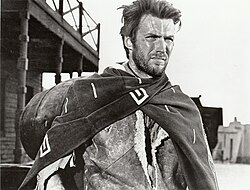
The Man with No Name is an iconic cinematic antihero portrayed by Clint Eastwood in the Dollars Trilogy, a series of influential Italian-produced Western films directed by Sergio Leone. Comprising A Fistful of Dollars (1964), For a Few Dollars More (1965), and The Good, the Bad and the Ugly (1966), the trilogy redefined the Western genre through its stylized violence, moral ambiguity, and minimalist storytelling.
The character's moniker was a marketing invention by the American distributor United Artists rather than a narrative device within the films themselves. In each installment, the protagonist is referred to by different nicknames: "Joe" in A Fistful of Dollars, "Manco" in For a Few Dollars More, and "Blondie" in The Good, the Bad and the Ugly. The character is defined by his stoic demeanor, signature sarape, brown hat, and constant use of cigarillos.
The character draws significant inspiration from the protagonist of Akira Kurosawa's Yojimbo (1961), a rōnin played by Toshiro Mifune. Both characters share a quiet, observant nature, a mastery of their respective weapons, and a tendency to manipulate warring factions for their own gain. This adaptation led to a notable legal dispute between Kurosawa's producers and Leone's team.

The Man with No Name is widely considered one of the most significant figures in the history of cinema. In 1996, during his American Film Institute Lifetime Achievement Award ceremony, the character was described by Jim Carrey as a vessel for the audience's own projections. In 2025, Empire magazine ranked him as the 33rd greatest movie character of all time, cementing his status as a permanent fixture in popular culture.
No. While marketed as the 'Man with No Name,' he is referred to as 'Joe,' 'Manco,' and 'Blondie' throughout the three films.
Breznican, Anthony (6 March 2011). "Johnny Depp's 'Rango': Its top six riffs on classic movies". Entertainment Weekly. Archived from the original on 7 November 2018. Retrieved 6 November 2018.
Brady, Matt (15 August 2008). "Christos Gage on The Man With No Name". Newsarama. Archived from the original on 19 February 2014. Retrieved 2 February 2014.
McGilligan, Patrick (19 August 2002). Clint: The Life and Legend. Macmillan. p. 131. ISBN 978-0-312-29032-0.
Phegley, Kiel (23 October 2008). "New Writers on The Man With No Name". Comic Book Resources. Archived from the original on 24 October 2008. Retrieved 2 February 2014.
Brady, Matt (28 April 2009). "First Look: Dynamite's The Good, the Bad and the Ugly #1". Newsarama. Archived from the original on 19 February 2014. Retrieved 2 February 2014.
"A Fistful of Dollars and Yojimbo". Side B Magazine. 14 April 2011. Archived from the original on 7 January 2014. Retrieved 2 February 2014.
Canby, Vincent (27 February 1975). "'Boss Nigger,' Black Western, Proves a Surprise". The New York Times. Archived from the original on 10 February 2018. Retrieved 26 January 2018.
Hughes, Howard (31 March 2006). Once Upon A Time in the Italian West: The Filmgoers' Guide to Spaghetti Westerns. Bloomsbury Publishing. ISBN 978-0-85773-045-9.
Hill, Jim (8 February 2020). "Why Clint Eastwood was a last minute addition to Disney-MGM's "Great Movie Ride"". jimhillmedia.com. Archived from the original on 16 April 2016. Retrieved 31 July 2020.
Brady, Matt (19 August 2008). "The Man With No Name's New Team: Lieberman & Wolpert". Newsarama. Retrieved 2 February 2014.
Unforgiven won four Academy Awards, including Best Picture and Best Director.
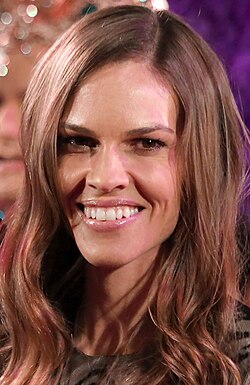
Million Dollar Baby grossed $216,763,646 worldwide during its theatrical run.
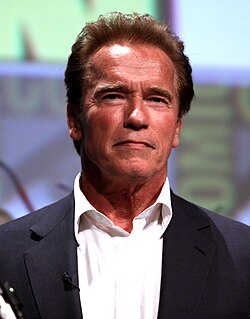
Cry Macho was directed by and starred Clint Eastwood, marking one of his final performances in a feature film.