Geography of Vermont
3 min
The Taconic Range's Highest Peak: A Profile of Mount Equinox
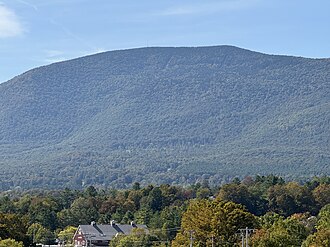
Mount Equinox is the highest peak in the Taconic Range.

Echetlus (Ancient Greek: Ἔχετλος), also referred to as Echetlaeus (Ἐχετλαῖος), is an ancient Athenian mythical hero associated with the historic Battle of Marathon in 490 BC. In Greek mythical tradition, he appeared during the fierce engagement between the Athenian forces and the invading Persian army of the Achaemenid Empire, turning the tide of battle through supernatural intervention.
According to accounts following the Battle of Marathon, Echetlus appeared suddenly in the thick of combat. He was described as a rustic figure resembling a simple farmer, wearing no traditional military armor. Rather than wielding a standard sword, spear, or shield, he fought using a plough or a ploughshare (known in Greek as an echetlon), single-handedly striking down numerous Persian soldiers before vanishing as abruptly as he had arrived.
When the Athenians attempted to identify the mysterious warrior after the conflict, their searches yielded no results. Seeking divine guidance, they consulted the Delphic Oracle and were instructed to pay proper reverence and worship to Echetlaeus—the hero defined by his ploughshare. His sudden appearance and subsequent disappearance firmly placed him alongside other divine and heroic intercessors believed to have aided the Greeks, such as the goddess Athena, the hero Heracles, and the legendary Athenian king Theseus.
The significance of Echetlus to the Athenian civic identity is demonstrated by his inclusion in monumental public art. He was notably depicted in the famous mural painting of the Battle of Marathon inside the Stoa Poikile (Painted Porch), a prominent civic and cultural building erected during the 5th century BC in the Ancient Agora of Athens.

Within this painting, created by renowned artists of antiquity, Echetlus was portrayed among the central combatants, standing shoulder-to-shoulder with historical and semi-legendary figures of the battle, including the polemarch Callimachus and the general Miltiades. This placement elevated his status from a mere folk legend to an esteemed guardian figure of Athens.
Scholars have long noted the strong symbolic ties between Echetlus and agrarian traditions. His name translates literally to "he of the plough-handle." His visual description and weapon closely mirror those of Bouzyges, another ancient hero credited with founding agriculture, whose name means "yoker of oxen." This blending of agricultural imagery with martial prowess highlights the deep connection ancient Greek communities drew between the fertility of the land, the protection of their territory, and divine favor during times of crisis.
Echetlus was a rustic mythical hero who, according to Athenian tradition, mysteriously appeared at the Battle of Marathon to help defeat the Persians using only a plough.
Smith, William (1890). Earinus-Nyx. London: J. Murray. p. 3.
Rosen, Ralph; Sluiter, Ineke (2006). City, Countryside, and the Spatial Organization of Value in Classical Antiquity. Leiden: BRILL. p. 361. ISBN 9789004150430.
Pausanias (2012). Pausanias's Description of Greece. Cambridge: Cambridge University Press. p. 489. ISBN 9781108047272.
Pausanias 1.32.5
Fink, Dennis (2014). The Battle of Marathon in Scholarship: Research, Theories and Controversies Since 1850. Jefferson, NC: McFarland & Company, Inc., Publishers. p. 187. ISBN 9780786479733.
Ferrario, Sarah (2014). Historical Agency and the 'Great Man' in Classical Greece. Cambridge: Cambridge University Press. p. 39. ISBN 9781107037342.
Steinbock, Bernd (2013). Social Memory in Athenian Public Discourse: Uses and Meanings of the Past. Ann Arbor, MI: University of Michigan Press. p. 88. ISBN 9780472118328.
Mount Equinox is the highest peak in the Taconic Range.
Founded in 1926 as the South Island Motor Union (SIMU).
The Hungarian water polo system operates on a hierarchical pyramid model with promotion and relegation.