Cinema
2 min
Unforgiven: A Revisionist Masterpiece of the Western Genre
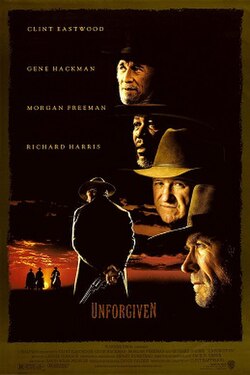
Unforgiven won four Academy Awards, including Best Picture and Best Director.
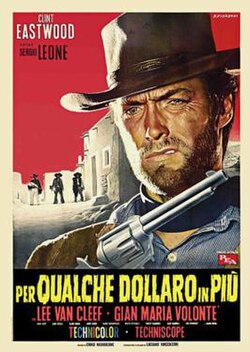
For a Few Dollars More (Italian: Per qualche dollaro in più) is a seminal 1965 Spaghetti Western directed by Sergio Leone. Serving as the second installment in the iconic Dollars Trilogy, the film expanded upon the stylistic innovations introduced in A Fistful of Dollars (1964) and preceded the epic conclusion, The Good, the Bad and the Ugly (1966). An international co-production between Italy, West Germany, and Spain, the film is noted for its distinct visual language, Ennio Morricone's evocative score, and the complex interplay between its two protagonists.
The plot follows two bounty hunters, the laconic Manco (Clint Eastwood) and the methodical Colonel Douglas Mortimer (Lee Van Cleef), who initially operate as rivals. Their paths converge as they pursue El Indio, a psychopathic outlaw who has recently escaped from prison. Indio is haunted by a traumatic past involving a musical pocket watch, which he uses to time his duels. As the bounty hunters infiltrate Indio's gang, the film shifts from a standard revenge tale into a strategic game of cat-and-mouse, culminating in a tense showdown that reveals the personal motivations driving Mortimer's pursuit of justice.
Leone's direction in For a Few Dollars More solidified the tropes of the Spaghetti Western genre. The film utilized the stark landscapes of Almería, Spain, to represent the American frontier, while the production design at Cinecittà Studios provided a gritty, lived-in aesthetic. The collaboration between Leone and composer Ennio Morricone became a defining feature of the trilogy, with the music serving as a narrative device rather than mere background accompaniment. The film was produced by Alberto Grimaldi and featured a screenplay penned by Leone, Luciano Vincenzoni, and Sergio Donati.
Upon its release, the film was a significant commercial success, grossing approximately $25.5 million against a modest budget of $600,000. It is widely credited with elevating the status of the Western genre in European cinema and cementing Clint Eastwood's international stardom. The film's influence persists in modern cinema, particularly in its revisionist approach to morality and its stylized, tension-filled action sequences.
While it is marketed as the second installment of the Dollars Trilogy, the films are not direct narrative sequels. They share the same director, composer, and lead actor, but the characters played by Clint Eastwood are distinct entities across the three films.
Hughes, p. 8.
Schwartz, John (25 September 2013). "Luciano Vincenzoni, Screenwriter, Dies at 87". The New York Times. Archived from the original on 3 April 2015. Retrieved 7 January 2014.
For a Few Dollars More (Tre Voci – For a Few Dollars More) (Blu-ray disc). Los Angeles, California: Metro-Goldwyn-Mayer. 1967.
Newman, Kim (1990). Wild West Movies: How the West was found, won, lost, lied about, filmed and forgotten. London: Bloomsbury. pp. 127–128. ISBN 0747507473.
Martinovic, Paul (18 January 2013). "Looking back at Sergio Leone's Dollars trilogy". Den of Geek. Dennis Publishing. Archived from the original on 2 April 2015. Retrieved 17 March 2015.
Doran, John (8 April 2010). "Ennio Morricone Interviewed: "Compared To Bach, I'm Practically Unemployed"". The Quietus. Archived from the original on 14 November 2020. Retrieved 16 March 2015.
The character, notably publicized as "the Man with No Name", is listed in the credits as "Manco" and is so called, in multiple instances, in the film; nevertheless, that may not be his real name.
John White (30 November 2010). Westerns. Taylor & Francis. pp. 48–. ISBN 978-1-136-85559-7. Archived from the original on 29 September 2020. Retrieved 12 November 2017.
Hodgkinson, Will (14 July 2006). "A Fistful of Dollars? It's my worst ever score'". The Guardian. Archived from the original on 2 April 2015. Retrieved 15 March 2015.
Crowther, Bosley (4 July 1967). "Screen: 'For Few Dollars More' Opens: Trans-Lux West Shows New Eastwood Film 2 Rivals in Murder Are Presented as Heroes". The New York Times. Archived from the original on 15 February 2015. Retrieved 17 March 2015.
Unforgiven won four Academy Awards, including Best Picture and Best Director.
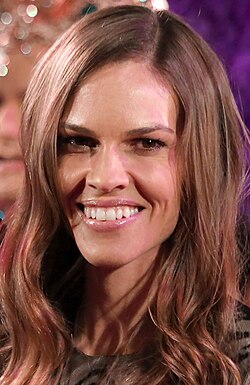
Million Dollar Baby grossed $216,763,646 worldwide during its theatrical run.
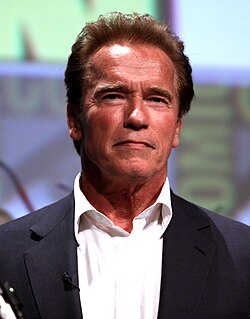
Cry Macho was directed by and starred Clint Eastwood, marking one of his final performances in a feature film.