Cinema
2 min
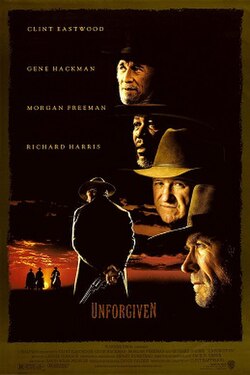
Unforgiven: A Revisionist Masterpiece of the Western Genre
Unforgiven won four Academy Awards, including Best Picture and Best Director.
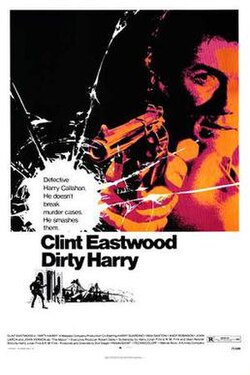
Released in 1971, Dirty Harry is a seminal American action-thriller directed by Don Siegel. The film introduced audiences to Inspector Harry Callahan, a cynical and uncompromising San Francisco Police Department (SFPD) detective portrayed by Clint Eastwood. The narrative, which draws thematic inspiration from the real-life terror of the Zodiac Killer, follows Callahan as he pursues a psychopathic sniper known as Scorpio through the streets of San Francisco.
Produced by The Malpaso Company and distributed by Warner Bros., the film was made on a budget of $4 million and became a significant commercial success, grossing approximately $36 million. Its gritty depiction of urban crime and the moral ambiguity of its protagonist helped define the police procedural and vigilante subgenres of the 1970s. In 2012, the Library of Congress selected Dirty Harry for preservation in the United States National Film Registry, citing its cultural, historical, and aesthetic significance.
The plot centers on the conflict between Harry Callahan and a sadistic sniper who extorts the city of San Francisco. After Callahan foils a bank robbery using his signature Smith & Wesson Model 29 revolver, he is paired with a rookie partner, Chico Gonzalez. The investigation leads to a series of confrontations, culminating in a legal stalemate when the district attorney rules that evidence against the suspect was obtained illegally. This tension between the letter of the law and the pursuit of justice serves as the film's primary philosophical conflict, ultimately leading to a final, violent showdown at a quarry.
The success of the film spawned a franchise consisting of four sequels: Magnum Force (1973), The Enforcer (1976), Sudden Impact (1983), and The Dead Pool (1988). Beyond its sequels, the film is frequently studied for its cinematography by Bruce Surtees and its iconic score composed by Lalo Schifrin, both of which contributed to the film's tense, neo-noir atmosphere.
While the film is a work of fiction, it was heavily influenced by the real-life terror caused by the Zodiac Killer, who operated in the San Francisco area during the late 1960s.
Malick, Milius & Fink, Dirty Harry November 1970 Script.
666 Filbert St (January 1, 1970). "666 Filbert Street, San Francisco, CA 94133". Google Maps. Retrieved December 20, 2013.
"Complete National Film Registry Listing". Library of Congress. Retrieved June 5, 2020.
"The 100 best action movies". Time Out. Retrieved November 7, 2014.
Larkspur Ferry Terminal |publisher=Google Maps
"New Dirty Harry DVDs: We're in luck". March 10, 2008. Retrieved April 15, 2010.
"Golden Gate Ferry Research Library". Goldengateferry.org. Archived from the original on November 26, 2013. Retrieved December 20, 2013.
"Ten film quotes we all get wrong". The Daily Telegraph. January 14, 2014. Archived from the original on January 12, 2022. Retrieved March 14, 2020.
McGilligan (1999), p. 207.
Kael, Paulie (1994). For Keeps: 30 Years at the Movies. New York: Dutton. p. 418. ISBN 0452273080.
Unforgiven won four Academy Awards, including Best Picture and Best Director.
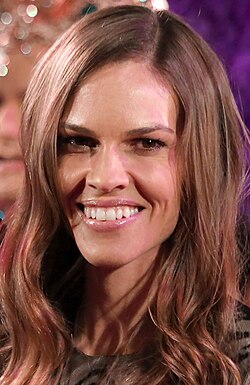
Million Dollar Baby grossed $216,763,646 worldwide during its theatrical run.
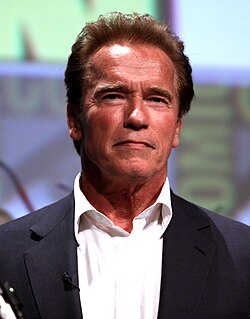
Cry Macho was directed by and starred Clint Eastwood, marking one of his final performances in a feature film.