T
Digital Culture and Heritage
2 min
The Proposal to Designate Wikipedia as a UNESCO World Heritage Site
The proposal to list Wikipedia as a World Heritage Site was formally discussed at the 2011 Wikimedia Conference in Berlin.
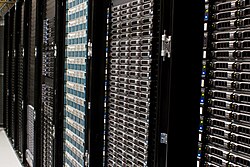
Digital curation is the professional practice of selecting, preserving, maintaining, collecting, and archiving digital assets. It serves as a comprehensive framework for establishing and adding value to digital repositories, ensuring that data remains reliable and accessible for both immediate use and long-term future requirements. While historically rooted in library and archival sciences, the discipline has expanded into scientific research and corporate enterprise management to mitigate the risks of digital obsolescence.
The term curation originates from museology, traditionally referring to the care, preservation, and exhibition of physical cultural heritage. In the digital age, this concept has evolved to encompass the management of intangible assets. The formalization of digital curation as a distinct field gained momentum through legal frameworks such as the National Historic Preservation Act of 1966 and subsequent federal regulations like 36 CFR Part 79, which established standards for the care of federally owned archaeological collections. Today, the term bridges the gap between traditional heritage management and modern information technology.
Digital curation is governed by a commitment to the entire lifecycle of an asset, from its initial creation to its eventual retirement. Practitioners adhere to five primary principles:
The Digital Curation Center (DCC) provides a standardized methodology for managing digital materials. This process is divided into sequential and occasional actions:
Digital preservation is a subtask of digital curation focused specifically on maintaining the technical integrity of files. Digital curation is a broader discipline that includes preservation but also encompasses appraisal, metadata creation, and active management to increase the value and usability of the collection.
"Digital Curation - MLIS Career Pathway". SJSU School of Information. 5 October 2020. Archived from the original on October 19, 2021. Retrieved November 4, 2022.
Lazorchak, Butch (August 23, 2011). "Digital Preservation, Digital Curation, Digital Stewardship: What's in (Some) Names?". Library of Congress. Archived from the original on September 30, 2022. Retrieved November 14, 2022.
"Homepage". DCC because good research needs good data. Retrieved April 25, 2022.
"Current Issue". International Journal of Digital Curation. Retrieved April 25, 2022.
"What is Digital Curation?". Digital Curation Centre. Retrieved 2008-04-01.
"We must fight to preserve digital information". The Economist. 2019-02-21. ISSN 0013-0613. Retrieved 2019-05-01.
Tibbo, Helen R. (2015). "Digital Curation Education and Training: From Digitization to Graduate Curricula to MOOCs". International Journal of Digital Curation. 10: 144–153. doi:10.2218/ijdc.v10i1.352.
"1st African Digital Management and Curation Conference and Workshop". African Digital Curation Conference. 13 February 2008. Retrieved April 25, 2022.
Katuu, Shadrack. (2012). Enterprise Content Management and Digital Curation Applications Maturity Model Connections.
E. Curry, A. Freitas, and S. O'Riáin, "The Role of Community-Driven Data Curation for Enterprises," Archived 2012-01-23 at the Wayback Machine in Linking Enterprise Data, D. Wood, Ed. Boston, MA: Springer US, 2010, pp. 25-47.