Geography and History
2 min
Augsburg: History, Geography, and Culture of Bavaria's Third-Largest City
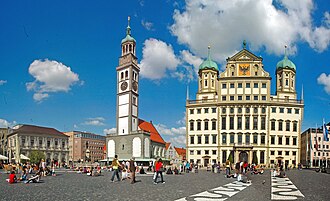
Augsburg was founded in 15 BC by the Romans under Emperor Augustus as Augusta Vindelicorum.
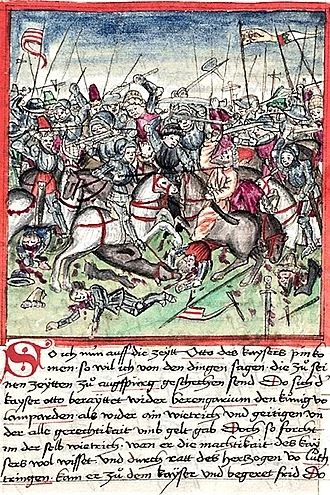
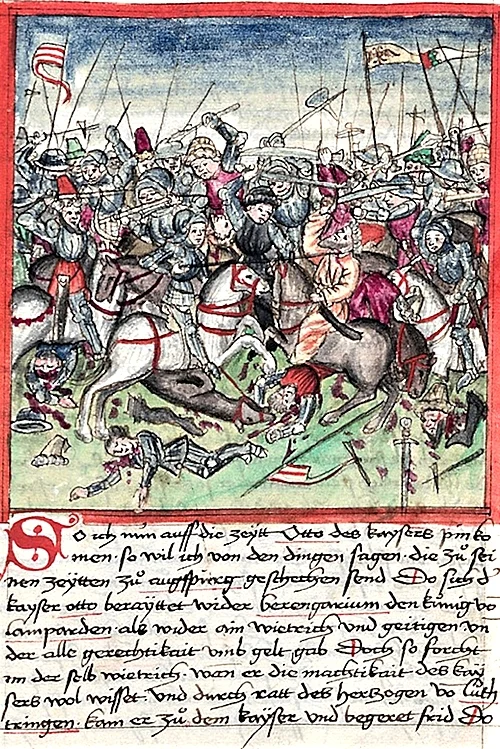
The Second Battle of Lechfeld, fought from 10 to 12 August 955, was a decisive series of military engagements near Augsburg on the Lechfeld plain in Bavaria. Forces of the Kingdom of Germany, led by King Otto I, confronted and decisively defeated the Hungarian raiding armies commanded by chieftains including Bulcsú, Lél, and Súr.
In the late spring and early summer of 955, Hungarian forces launched a major campaign into the Duchy of Bavaria. Utilizing their traditional tactics of fast-moving horse archers supported by infantry and siege engines, the Magyar forces aimed to draw the main military strength of East Francia into open-field combat. As part of their campaign strategy, they laid siege to the city of Augsburg along the Lech River.
In response to the threat, King Otto I mobilized a relief army composed of heavy cavalry and infantry drawn from various regions, including Saxony, Thuringia, Bavaria, Swabia, and Bohemia. The German army marched toward Augsburg to lift the siege and confront the invaders.
As the German forces approached Augsburg on 10 August 955, Hungarian units executed a surprise flank attack that destroyed the rearguard legion composed of Bohemian troops. Capitalizing on their initial success, the attacking Hungarians broke formation to plunder the German supply camp. This delay allowed Conrad, Duke of Lorraine, to lead a disciplined counter-attack with heavy cavalry, dispersing the plunderers.
Following this counter-attack, King Otto I engaged the primary Hungarian force blocking the approach to Augsburg. The heavily armored German cavalry gained the upper hand in close-quarter combat against the more lightly equipped Magyar horsemen. Despite heavy pressure, the Hungarian forces conducted an orderly retreat.
Rather than engaging in immediate pursuit, Otto I secured Augsburg for the evening and dispatched messengers to secure river crossings across eastern Bavaria to trap the retreating enemy. Heavy rainfall and flooding over the subsequent days hampered the Hungarian retreat, allowing German forces to systematically pursue and neutralize scattered bands. Captured leaders were brought to Augsburg and executed.
The German victory at Lechfeld effectively halted major nomadic incursions from the east into Western Europe, bringing an end to a century-long tradition of western raiding by Hungarian tribes. The military triumph substantially elevated Otto I's political stature, paving the way for his later coronation as Holy Roman Emperor.
The battle took place over three days from 10 to 12 August 955.
Delbrück 1990, p. 122.
Kristó 1985, p. 76.
IMDb 2008
Bowlus 2016, p. 13.
Bowlus 2016, pp. 11–12.
Bowlus 2016, p. 172.
Kristó 1985, p. 86.
Thatcher & McNeal 1905, p. 77.
Bowlus 2016, p. 50.
Kristó 1985, pp. 81–82.
Augsburg was founded in 15 BC by the Romans under Emperor Augustus as Augusta Vindelicorum.
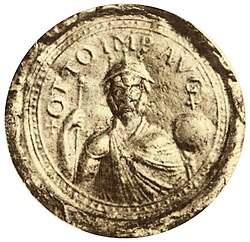
Otto I was born on November 23, 912, as the oldest son of Henry the Fowler.
The year 955 was a common year starting on Monday of the Julian calendar.