
Electronic Music Genres
2 min
Vaporwave Culture and Electronic Music
Vaporwave emerged in the early 2010s as an internet music microgenre and visual aesthetic.
Chillwave is a music microgenre that emerged in the late 2000s, characterized by evoking the popular music of the late 1970s and early 1980s while engaging with themes of memory and nostalgia. Common sonic features include a faded retro pop sound, escapist lyrical themes such as summer or the beach, psychedelic or lo-fi aesthetics, mellow vocals, slow-to-moderate tempos, heavy reverb and effects processing, and the use of vintage synthesizers.

Chillwave was notably one of the first music genres to develop primarily through the Internet. The term was coined in 2009 by the satirical blog Hipster Runoff to lampoon newly emerging microgenres and indie music acts whose sounds resembled incidental music from 1980s VHS tapes. Prior to the coinage of the term, similar music was often labeled as shoegaze, dream pop, ambient, or indietronica.
Leading acts that defined the sound included Neon Indian, Washed Out, and Toro y Moi, who gained widespread attention during the summer of 2009. Washed Out's 2009 track "Feel It All Around" remains widely recognized as a defining song of the movement.
Scholars and music journalists often trace the roots of chillwave to earlier lo-fi and ambient works. Ariel Pink is frequently cited as a foundational influence for his home-recorded albums that reconfigured 1970s radio-rock and 1980s new wave aesthetics. In March 2007, Animal Collective member Panda Bear released his solo album Person Pitch, which is frequently credited with launching the sonic style that inspired chillwave artists. Additionally, Atlas Sound—the solo project of Bradford Cox—contributed ambient pop textures that prefigured the movement's focus on impermanence and memory.
Many artists exploited the style's low-budget, bedroom-producer simplicity, leading to an oversaturation of acts that contributed to the original scene's decline. The term "chillwave" eventually took on a pejorative connotation due to perceptions of shallowness and an over-reliance on nostalgia. By the mid-2010s, chillwave had faded in mainstream popularity as artists and listeners shifted toward subsequent Internet-born genres such as vaporwave and cloud rap.
Chillwave is a late-2000s music microgenre characterized by vintage synthesizers, heavy reverb, retro pop sounds from the 1970s and 1980s, and nostalgic themes.
Cheshire, Tom (March 30, 2011). "Invent a new genre: Hipster Runoff's Carles explains 'chillwave'". The Wired. Archived from the original on August 5, 2017. Retrieved August 25, 2017.
Richards, Sam (June 7, 2010). "Ariel Pink's Haunted Graffiti – Before Today". Uncut. Archived from the original on January 22, 2018. Retrieved April 4, 2017.
Phaneuf, Whitney (January 9, 2013). "Toro Y Moi Eases Into Adulthood". East Bay Express. Archived from the original on February 2, 2017. Retrieved January 30, 2017.
Despres, Sean (June 18, 2010). "Whatever you do, don't call it 'chillwave'". The Japan Times. Archived from the original on November 9, 2016. Retrieved November 8, 2016.
Pareles, Jon (March 21, 2010). "Spilling Beyond a Festival's Main Courses". The New York Times. Archived from the original on February 23, 2021. Retrieved May 11, 2010.
Reges, Margaret. "Panda Bear". AllMusic. Archived from the original on January 10, 2017. Retrieved March 30, 2017.
Joyce, Colin (August 23, 2019). "Chillwave Was the First Great Genre of the Internet Era". Vice.
Raffeiner, Arno (September 14, 2017). "Interview: Ariel Pink". Red Bull Music Academy. Archived from the original on January 8, 2021. Retrieved February 2, 2018.
Eady, Ashley (February 14, 2014). "Chillwave: Has The Next "Big Thing" Arrived?". WRVU Nashville. Archived from the original on September 2, 2024. Retrieved March 14, 2017.
Carew, Anthony (May 20, 2011). "Perfecting the pitch". The Sydney Morning Herald. Archived from the original on March 31, 2017. Retrieved March 30, 2017.
Vaporwave emerged in the early 2010s as an internet music microgenre and visual aesthetic.
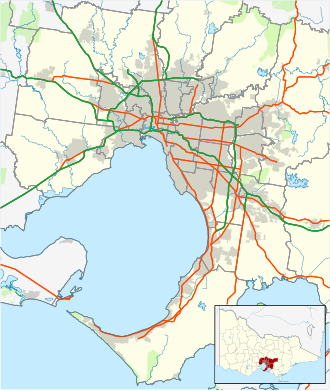
Mulgrave is located 21 kilometres south-east of Melbourne's central business district.
The violin octet consists of eight acoustically scaled bowed string instruments.