
Geography of Vermont
3 min
The Taconic Range's Highest Peak: A Profile of Mount Equinox
Mount Equinox is the highest peak in the Taconic Range.
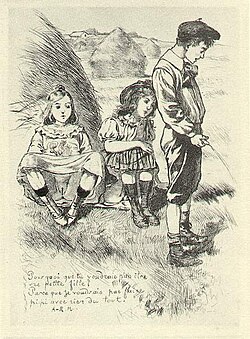
Child sexuality encompasses the normal, age-appropriate curiosity, behaviors, and physical sensations related to the body, gender, and reproduction that children experience as they grow. Unlike adult sexual behavior, which is typically goal-driven and reproductive or relational, childhood sexual behavior is rooted in exploration, curiosity, and sensory discovery. Research indicates that more than half of children engage in some form of sexual behavior before reaching puberty, largely through standard exploratory play.
Children naturally explore their bodies and the bodies of others as part of standard cognitive and physical development. This curiosity evolves through distinct developmental stages:
Genital penetration and oral-genital contact are extremely uncommon among young children and, when present, typically reflect an imitation of adult behaviors or can be an indicator of potential sexual abuse.
Self-stimulation and tactile exploration are common during childhood. As children approach the ages of eight or nine, some develop an awareness of specific erotic sensations and seek out pleasurable experiences through fantasy or self-touch. Interpersonal sexual experiences, such as mutual exploration or peer sex play, also occur among friends or siblings. While such play tends to decline during elementary school years, curiosity surges again during puberty.
As children mature, they become increasingly aware of biological sex differences, often gravitating toward same-sex peer groups and showing heightened awareness of social norms surrounding nudity, privacy, and gender roles. During this phase, distinguishing normal developmental curiosity from indicators of child sexual abuse remains an important responsibility for educators and childcare professionals, requiring careful policy balance to avoid moral panic while ensuring child safety.
Yes, young children frequently explore their bodies, including their private parts, out of natural curiosity or as a self-soothing mechanism when tired or upset. This behavior is typically a normal part of childhood development.
Friedrich, William N.; Fisher, Jennifer; Broughton, Daniel; Houston, Margaret; Shafran, Constance R. (1998). "Normative sexual behavior in children: a contemporary sample". Pediatrics. 101 (4): E9. doi:10.1542/peds.101.4.e9. PMID 9521975. S2CID 5436544.
"MSN". www.msn.com. Retrieved 2025-12-28.
Dill, Karen (2009). How Fantasy Becomes Reality: Seeing Through Media Influence. Oxford University Press. ISBN 978-0195372083.
SEX PLAY: parenting strategies by Dr. Marilyn Heins Archived 2006-09-07 at the Wayback Machine
Joel W Grube, Enid Gruber (2000). "Adolescent sexuality and the media: a review of current knowledge and implications". Western Journal of Medicine. 172 (3): 210–214. doi:10.1136/ewjm.172.3.210. PMC 1070813. PMID 10734819.
Zadrozny, Brandy (May 14, 2015). "Are These the World's Most Graphic Sex-Ed Videos?". The Daily Beast.
Lamb, Sharon; Zurbriggen, Ellen L.; Collins, Rebecca L.; Roberts, Tomi-Ann; Tolman, Deborah L.; Ward, L. Monique; Blake, Jeanne (2007). Report of the American Psychological Association Task Force on the Sexualization of Girls (Report). American Psychological Association (APA).
Larsson, IngBeth. Child sexuality and sexual behaviorArchived 2012-11-19 at the Wayback Machine (2000), Swedish National Board of Health and Welfare (report), Article number 2000-36-001. English translation (Lambert & Tudball) Article number 2001-123-20.
Greenwald, Evan; Leitenberg, Harold (October 1989). "Long-term effects of sexual experiences with siblings and nonsiblings during childhood". Archives of Sexual Behavior. 18 (5): 389–399. doi:10.1007/BF01541971. PMID 2818170. S2CID 43279816.
Larsson & Svedin, 1999, op. cit.; Larsson & Svedin, publication data unavailable; cited in Larsson, 2000, op. cit.
Mount Equinox is the highest peak in the Taconic Range.
Founded in 1926 as the South Island Motor Union (SIMU).
The Hungarian water polo system operates on a hierarchical pyramid model with promotion and relegation.