A
Biography
2 min
Adam Klasfeld: American Legal Journalist and Playwright
Adam Klasfeld is an American legal journalist and the co-founder and editor-in-chief of All Rise News.
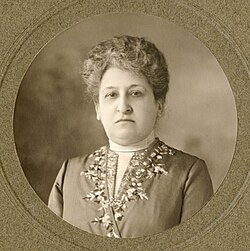
Aletta Henriëtte Jacobs (1854–1929) was a transformative figure in Dutch history, recognized as the first woman to officially attend a university in the Netherlands and one of the nation's earliest female physicians. Beyond her medical practice, she was a formidable activist who campaigned for women's suffrage, reproductive rights, and improved labor conditions.
Born in Sappemeer, Jacobs grew up in a family that valued education. Despite the rigid gender barriers of the 19th century, she was determined to follow in her father's footsteps as a doctor. Her path to higher education was unconventional; she secured permission from the Minister of the Interior, Johan Rudolph Thorbecke, to attend the University of Groningen as a probationary student in 1871. Her success paved the way for future generations of women in academia, and she earned her medical degree in 1879.
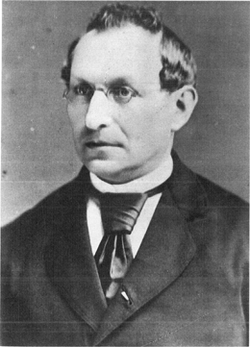
Jacobs established a medical practice where she focused on the needs of women and children, particularly those from impoverished backgrounds. Recognizing that economic instability and poor health were linked, she opened a free clinic in 1882. This facility became the world's first birth control clinic, providing essential information and access to contraception, which was a radical step for the era.
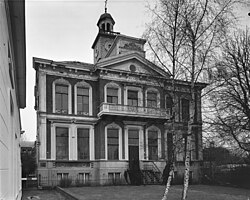
In 1883, Jacobs initiated a legal challenge to obtain the right to vote, marking the start of a lifelong commitment to political equality. Her activism extended to the international stage, where she helped establish the Women's International League for Peace and Freedom. Her efforts were instrumental in the eventual success of the Dutch women's suffrage movement, which achieved its goal in 1919. She remains a symbol of progress, having balanced a rigorous scientific career with a tireless pursuit of social justice.
Beyond her role as a physician, her most notable contribution was the establishment of the world's first birth control clinic in 1882, which provided reproductive health education and services to women.
While Aletta Jacobs is recognized as the first "official female physician", in the 1620s and 1630s, Trijn Jacobs, who was a member of the surgeons' guild of Amsterdam, treated patients. Records in the archives indicate that her treatments went beyond those of a traditional midwife or herbalist and that she performed surgery for leg and uterine injuries.
van Poppel & Röling 2003, pp. 159–160.
Leijenaar 2004, p. 88.
Jacobs's sister Frederika later became the first girl admitted as a regular student to this same high school.
Jacobs 1996, p. 55.
Jacobs 1996, pp. 8–9.
Jacobs 1996, p. 19.
Windsor 2002, p. 107.
Jacobs 1996, p. 13.
Feinberg 2009.
Adam Klasfeld is an American legal journalist and the co-founder and editor-in-chief of All Rise News.

Li Cheuk-to served as the artistic director of the Hong Kong International Film Festival from 2004 to 2018.

Nadhira Al Harthy was born in Muscat, Oman, in 1978.